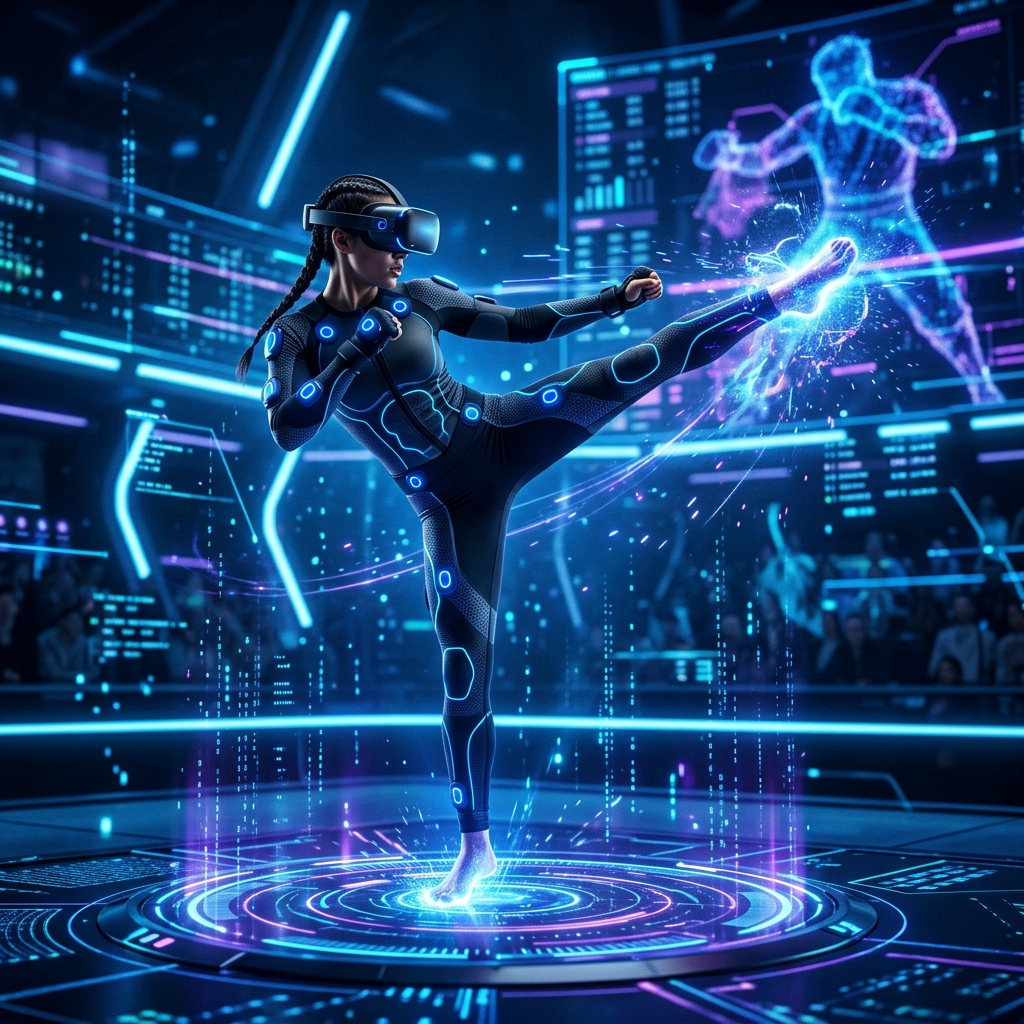
The Accelerating Trajectory
The speed at which Taekwondo evolves is dizzying. In less than twenty years, we transitioned from subjective, bloody, bare-knuckle striking in open squares, to hyper-stylized Olympic sensor-fencing inside octagons. Looking ahead to the horizon of Taekwondo 2030, the changes will be even more severe.
The global martial arts ecosystem is simultaneously consolidating technologically, while fracturing philosophically. Here are the primary projections for the sport and the art over the next cycle.
"The defining challenge of 2030 will not be updating the sensors. It will be ensuring that the 6-year-old child wearing the sensors actually remembers they are practicing a martial art."
1. The Complete AI Automation of Refereeing
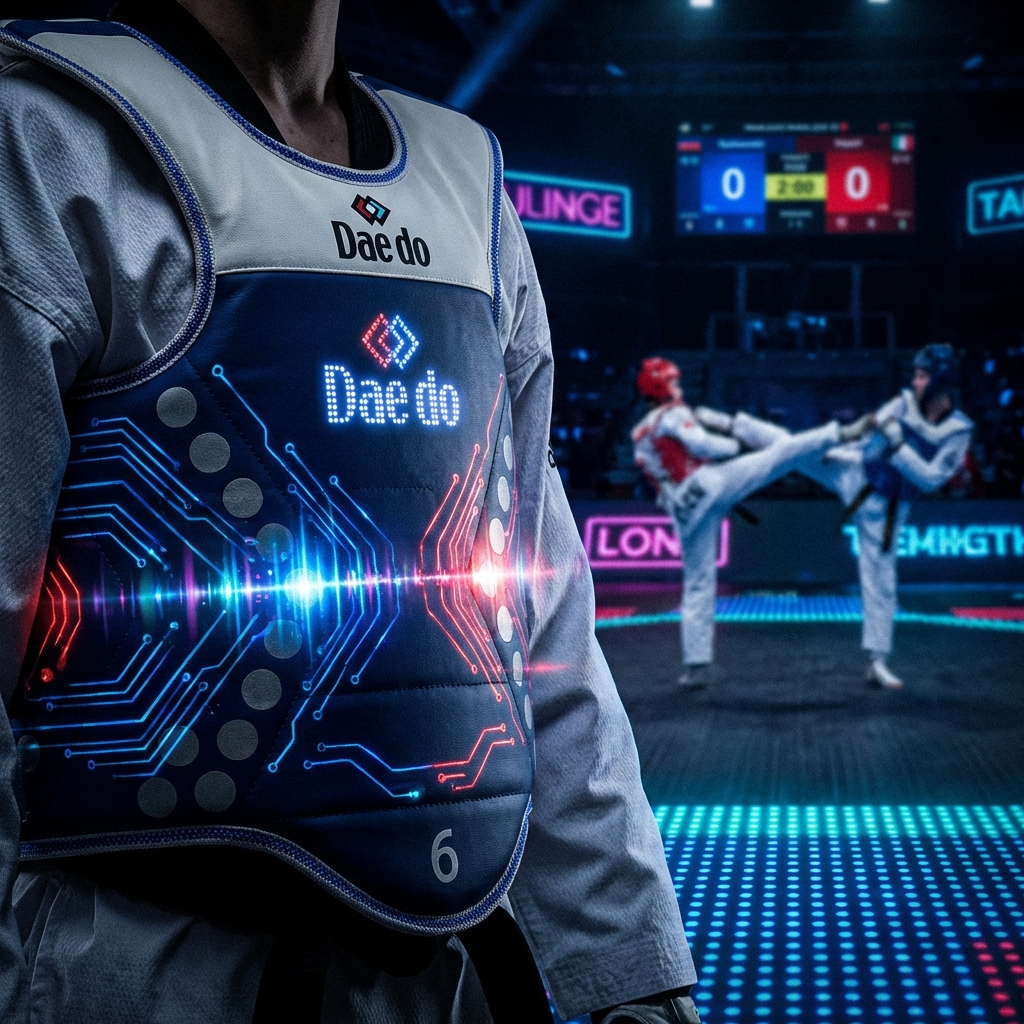
Human error in WT officiating is unacceptable in a multi-billion dollar broadcast era. By 2030, Center Referees will largely serve as safety marshals to separate clinches. 'Corner judges' will be entirely obsolete, replaced by a massive 12-camera stadium array running instantaneous AI posture analysis.
This AI will automatically issue 'Gam-jeom' penalties for passivity, stepping out of bounds, or illegal grabs within a 3-millisecond processing window, beaming the penalty directly to the scoreboard without a single human whistle.
- Predictive Analytics for Broadcasters: Viewers at home will see live 'Stamina Bars' superimposed on the athletes based on their real-time biometric outputs, similar to a fighting video game interface.
- The Death of the 'Blind Spot': With perfectly overlapping AI camera grids, the concept of a 'hidden kick' or a 'masked clinch grab' will vanish entirely from the sport meta.
2. The Massive Resurgence of Combat Taekwondo (ITF/WT Hybrid)
As WT sport becomes a game of electronic tag, a massive demographic of former Kyorugi athletes who crave contact are migrating to kickboxing or MMA. To recapture this market, 2030 will likely see the mainstream explosion of 'Combat Taekwondo' leagues.
These leagues (many already gaining traction) abandon electronic gear entirely. They reintroduce sweeping takedowns, bare-knuckle body strikes, and continuous full-contact engagements. It is a violent return to the roots of the Chung Do Kwan, heavily marketed towards the MMA demographic.
3. Virtual Reality Poomsae Universes
While Kyorugi embraces AI, Poomsae will embrace the Metaverse. By 2030, a practitioner in Malaysia will don a lightweight VR headset and flawlessly execute the Keumgang pattern synchronously alongside a Grandmaster located in Seoul in a perfectly rendered digital mountaintop dojang. Global Poomsae competitions will be held 24/7 in these localized digital arenas, drastically reducing travel costs for developing nations.
Conclusion: A Beautiful Fracture
By 2030, Taekwondo will no longer be a monolith. It will be permanently fractured into three distinct, thriving disciplines: The hyper-digital Olympic Game, the violent full-contact Professional League, and the deeply spiritual, traditional Dojang. This fracture is not the death of the art; it is its ultimate, unstoppable expansion.