The Burden of the Belt
In the realm of elite Olympic Kyorugi, you hire a coach. The coach analyzes your data, optimizes your diet, corrects your kinematics, and screams tactical adjustments from the corner chair. When you retire at age 28, the relationship often terminates. This is highly effective, transactional sports science.
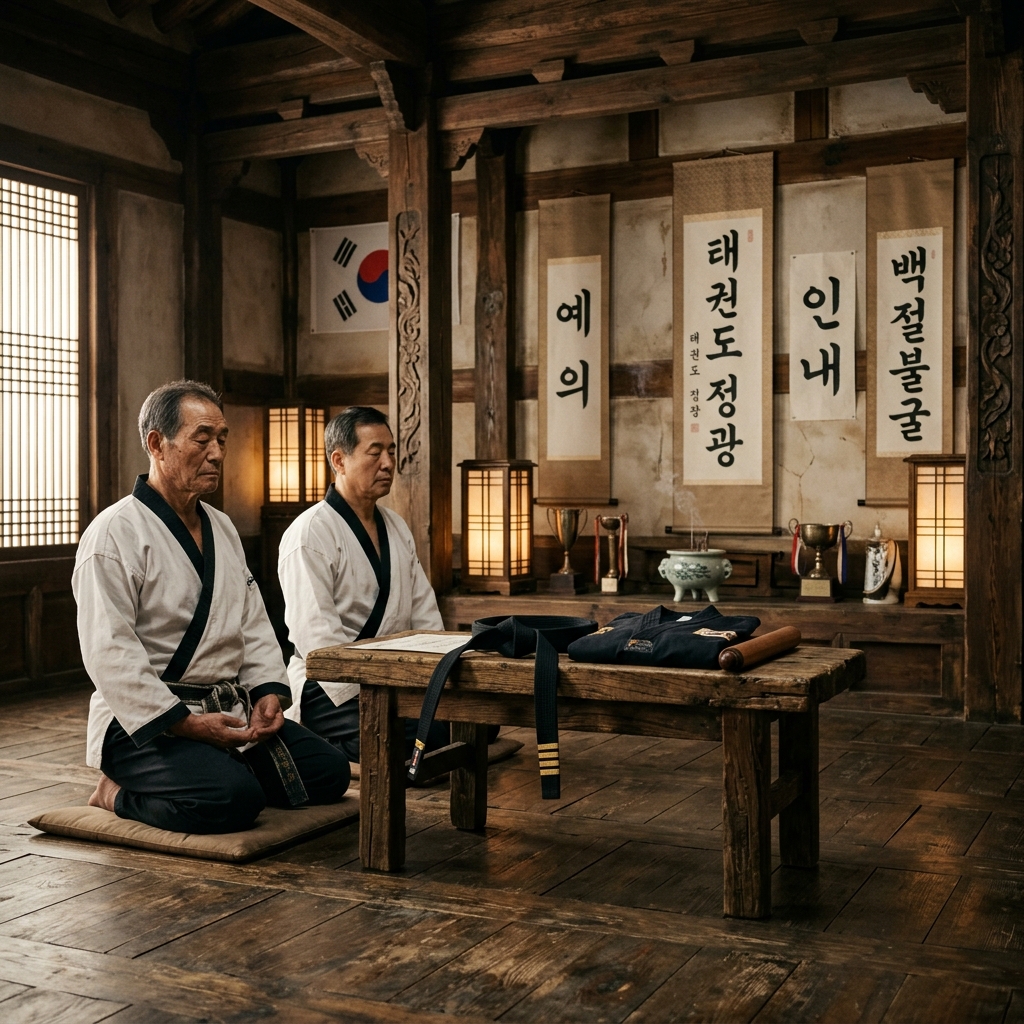
But stepping into a traditional dojang requires submission to a fundamentally different archetype: the Grandmaster (Kwan Jang Nim). A true Grandmaster (typically 8th or 9th Dan) is not merely a technician; they are a surrogate parent, a philosopher, and the fierce guardian of a martial lineage.
"A sport coach is judged by how many gold medals their athletes win. A Grandmaster is judged by how many functional, honorable human beings they forge from raw clay."
The Shift from Physical to Philosophical
To reach the rank of 9th Dan, a practitioner must devote 40 to 50 years to the art. At age 65, the Grandmaster no longer kicks at head-height with the speed of a 20-year-old. Their value is no longer physical; it is entirely experiential and philosophical.
- The Guardian of the Syllabus: While sport coaches chase the newest PSS meta, the Grandmaster anchors the art. They ensure that the deadly wrist locks, the deep historical context of the Poomsae, and the combat applications of the original Kwans (schools) are not forgotten.
- Lifelong Mentorship: A student does not "graduate" from a traditional master. The Grandmaster advises their adult students on marriages, career choices, and personal tragedies. The dojang operates as a highly disciplined extended family.
- Gatekeeper of the Rank: The Grandmaster uniquely possesses the authority to deny a belt not for lack of physical skill, but for lack of character. If an incredibly talented black belt candidate exhibits bullying behavior outside the dojang, it is the Grandmaster's supreme duty to halt their promotion.

The Disappearance of the Title
Unfortunately, the term "Grandmaster" has been heavily diluted by 35-year-old entrepreneurs claiming inflated ranks from obscure, unverified federations to legitimize their strip-mall businesses. The Kukkiwon (World Headquarters) has strict registry databases to combat this, but the cultural damage is palpable.
Conclusion
In an increasingly isolated and automated world, the role of the traditional Grandmaster is vital. They provide a rigid, moral compass and a connection to a demanding, ancient tradition. Choosing a dojang is not just selecting a gym; it is selecting the person who will heavily influence your moral framework for decades.