The Cinematic Spectacle of Destruction
If there is one image synonymous with Taekwondo in the public consciousness, it is the shattered pine board suspended mid-air. Kyupa (Breaking) is an integral pillar of traditional Taekwondo, alongside Poomsae (patterns) and Kyorugi (sparring). But it is often dismissed by MMA enthusiasts as a parlor trick.
The reality is much deeper. Breaking is the ultimate, objective test of the kinetic chain. Because you cannot strike a training partner with full, catastrophic force (lest you kill them), you must test the maximum velocity of your technique on inanimate, calibrated obstacles.
"Boards do not hit back. True. But a board also does not flinch, dodge, or apologize if you break your metacarpals against it. It is an honest judge."
The Biomechanics of the Break
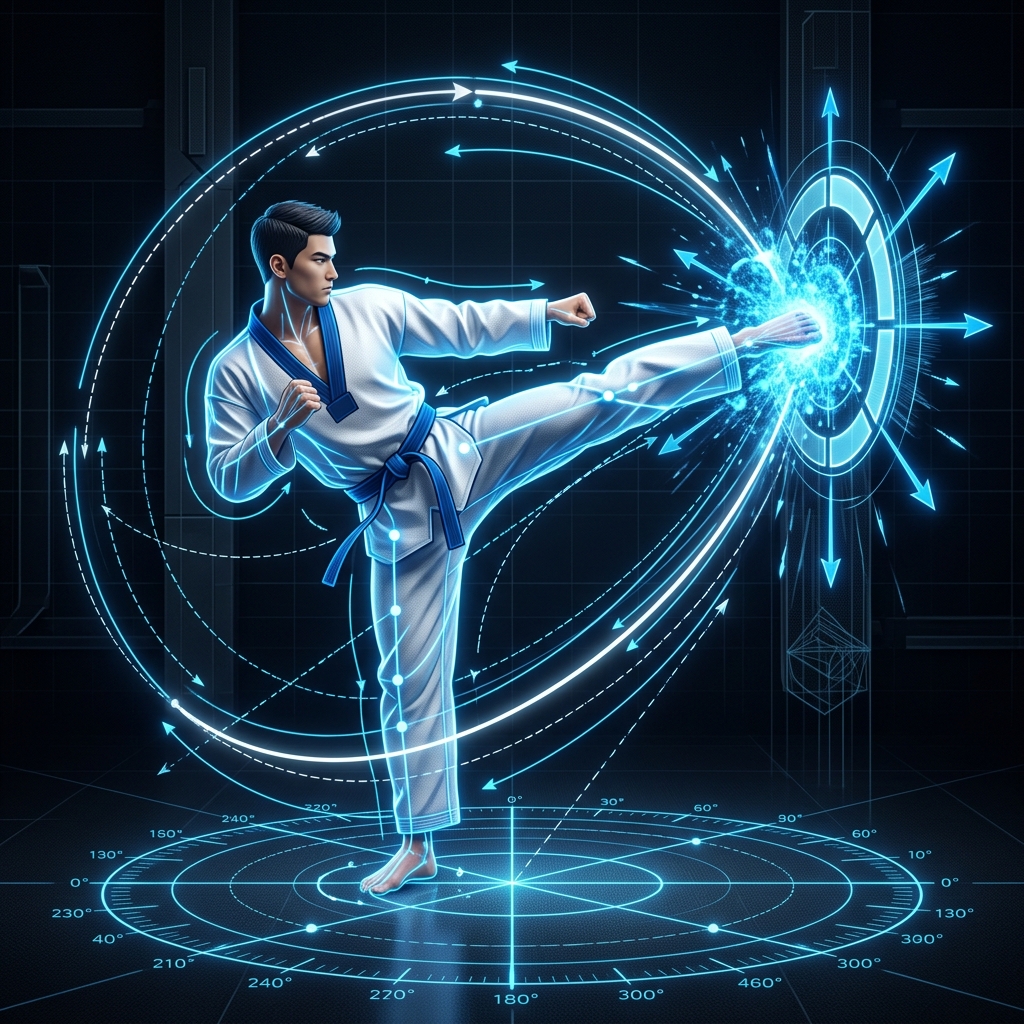
Breaking a 1-inch pine board requires surprisingly little muscle mass; it is entirely dependent on angular velocity (speed), surface area, and structural alignment.
- The Kinetic Linkage: To shatter three layered boards with a reverse punch (Bandae Jireugi), the force must originate in the floor. The back foot digs into the mat, twisting the hips, which torques the shoulder, before violently snapping the elbow and locking the wrist. If any of these joints leak energy—a bent wrist or a weak ankle—the boards will absorb the blow, usually resulting in a severe sprain to the practitioner.
- Targeting the Far Side (Penetration): The psychological block is the greatest hurdle. A novice aims their fist at the surface of the board. The body subconsciously decelerates to protect the hand. A master aims their strike twelve inches behind the board. The wood is merely in the way of the fist's predetermined path.
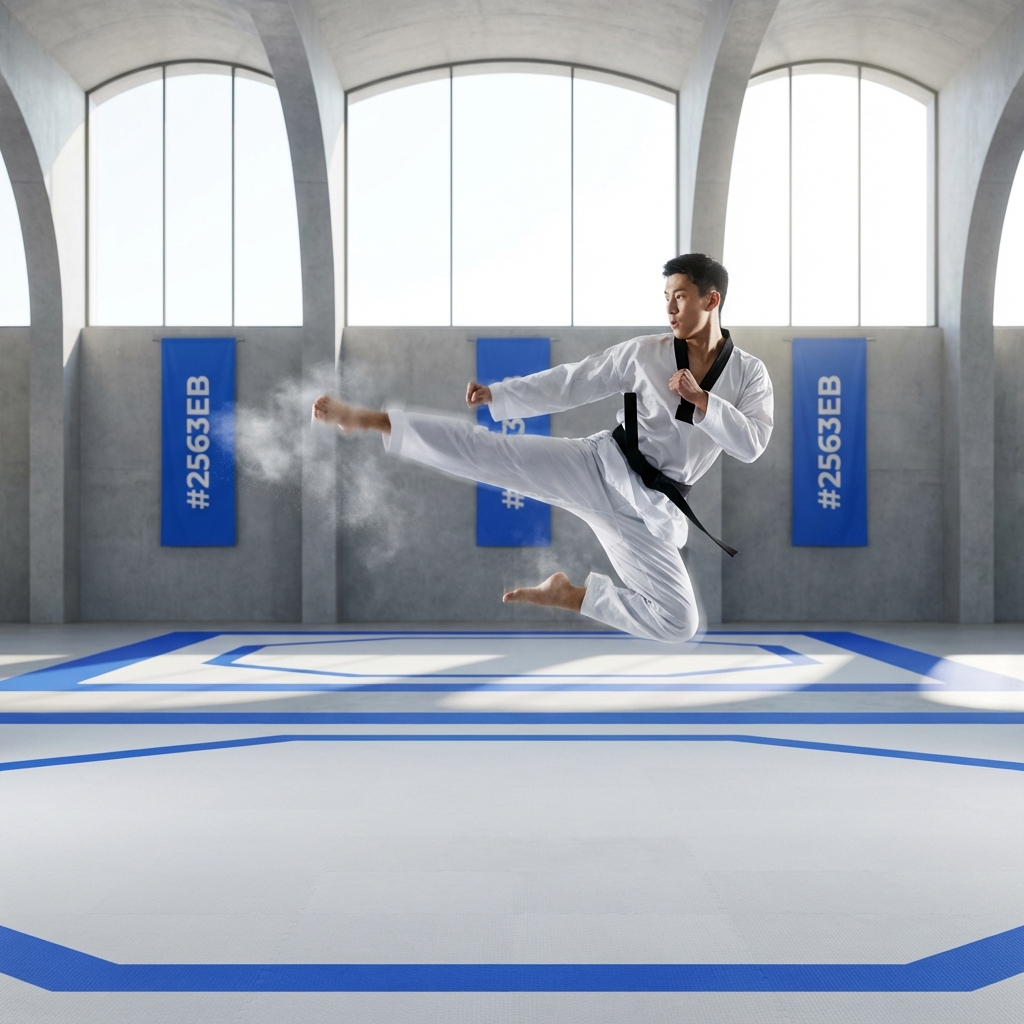
- Striking Surface Density: A 540-degree spinning hook kick relies on the immense density of the heel bone (calcaneus) to act as a hammer. If the practitioner misjudges the distance by two inches and strikes with the soft arch of the foot or the Achilles tendon, the result is crippling.
The Mental Conquest
Kyupa is 90% mental. It is an exercise in applied willpower. Standing before an inch of solid concrete, the human brain screams to abort the mission. Overriding that primal self-preservation instinct to strike with 100% uninhibited force requires profound Indomitable Spirit.
Conclusion
Breaking is not a parlor trick; it is a vital diagnostic tool. It proves to the student that their technique possesses lethal, structural validity. Furthermore, the spectacular aerial power-breaking (targeting boards suspended 10 feet in the air) pushes the boundaries of human plyometric capability, ensuring Taekwondo's reputation as the premier kicking art.