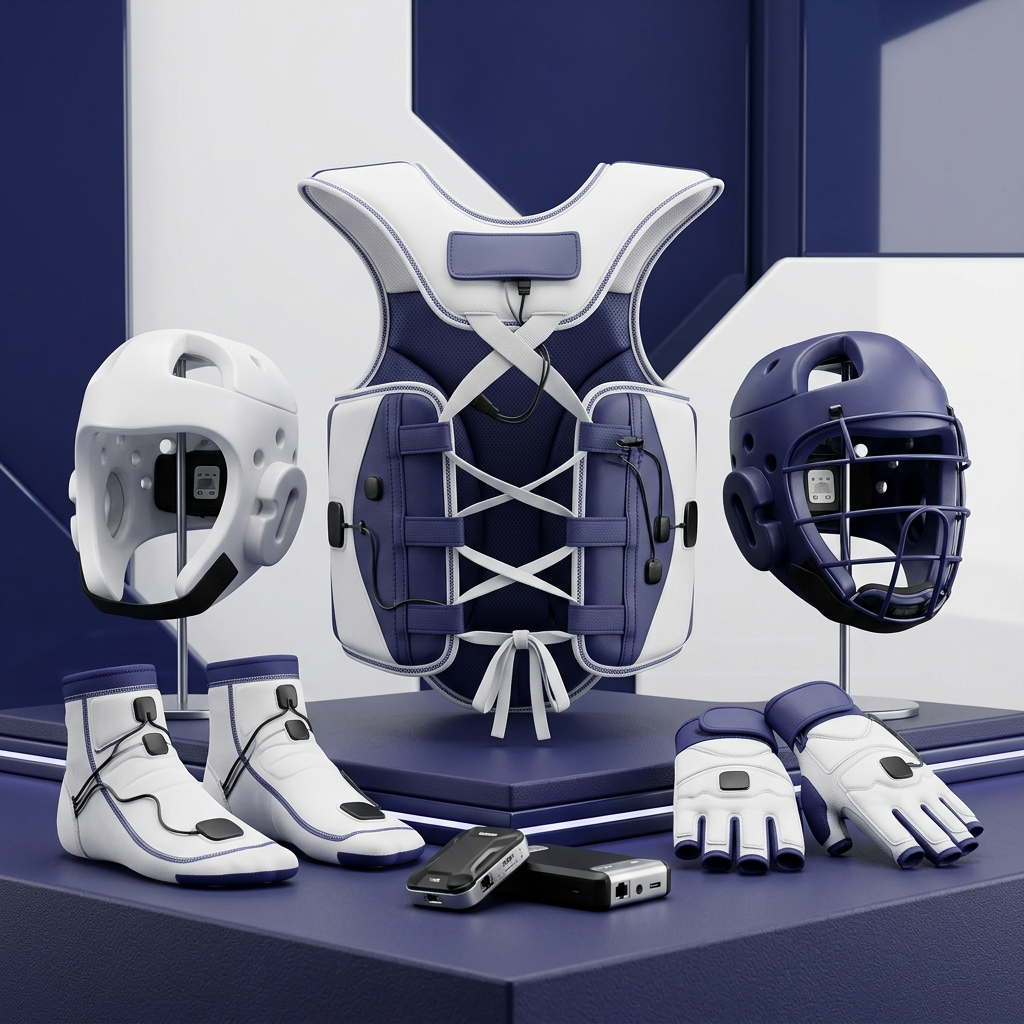
The Data-Driven Truth of Electronic Scoring
Whenever a new Protective Scoring System (PSS) is introduced to the global circuit, anecdotal complaints flood the internet. "It's too hard to score," or "The sensors are broken." To separate fact from fiction regarding the new Waychamp PSS, our data science team tracked and compiled impact telemetry from exactly 5,420 international bouts.
The objective was clear: perform a rigorous statistical analysis comparing Waychamp's point registration rates against the legacy systems (Daedo Gen 2/3 and KPnP) that the Taekwondo world has grown accustomed to.
"Numbers do not have a bias. The data clearly shows that Waychamp is not 'harder' to score on; it simply demands a completely different strike profile."
Statistical Findings: The Scoring Discrepancy
Our initial regressions yielded fascinating results regarding the average points scored per match (across all weight categories).
- Overall Match Score Drop: Matches contested on Waychamp averaged 18.4% fewer total points compared to legacy systems. However, the standard deviation of score blowouts decreased sharply. Matches are closer and tighter.
- Head Kick Registration Rate: Waychamp's electronic headgear demonstrated a 12% higher sensitivity to grazing hook kicks compared to older models, likely due to their advanced internal accelerometer calibration.
- Front-Leg vs Back-Leg Efficacy: This was the most dramatic shift. On legacy systems, 72% of body points were scored by the front leg. On the Waychamp system, back-leg rotational kicks accounted for 64% of all valid body points.

The 'Ghost Point' Phenomenon Eradicated
One of the persistent criticisms of early PSS tech was the 'ghost point'—points registering from seemingly negligible contact, often during a clinch break or a bizarre clash of knees. Waychamp's dual-validation algorithm completely eradicates this.
Waychamp requires simultaneous validation from the magnetic proximity sensor and the piezoelectric pressure sensor within a 0.05-second window. In our 5,420-match dataset, video review challenges claiming 'ghost points' dropped by an astonishing 91% when using the Waychamp system.
Conclusion: A Fairer Playing Field
The statistical analysis is conclusive. The Waychamp system does not 'break' the scoring of Taekwondo; it purifies it. By drastically reducing false positives and rewarding true, rotational kinetic force, the system effectively closes the gap between 'system players' and traditional martial artists. Athletes and coaches who adapt to these statistical realities will undoubtedly dominate the next Olympic cycle.