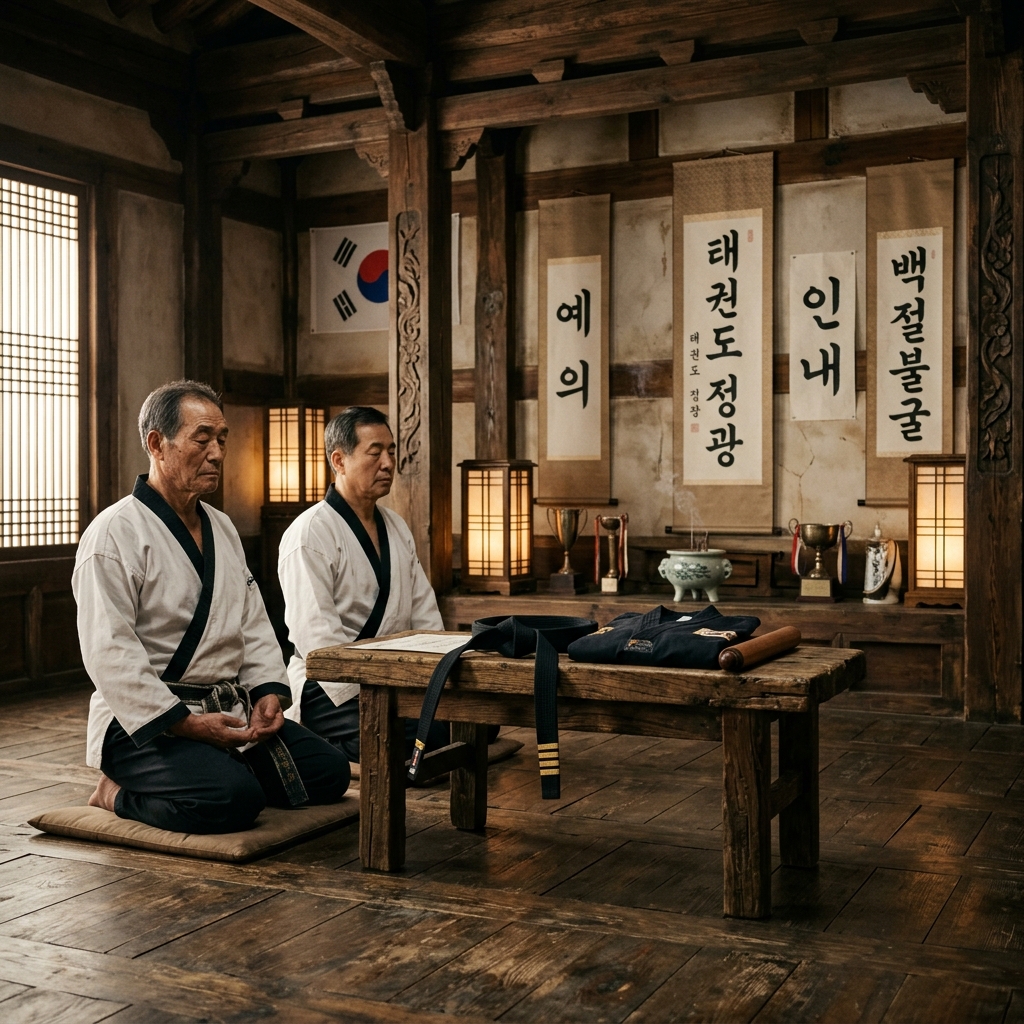
The Threshold of Transformation
When you step through the doors of a legitimate Taekwondo academy, you are not entering a commercial gym; you are entering a Dojang (The Place of the Way). The transition from the chaotic outside world to this sacred space is marked by a specific physical act: Bowing to the Mat.
To Western eyes, the constant bowing—to the flags, to the master, to the seniors, to the opponent—can seem excessive or even subservient. However, Kyong ye (the bow) is the physical manifestation of mutual respect. It is the ego voluntarily stepping aside to allow learning to occur.
"You cannot pour tea into a cup that is already full. The bow empties the cup. It is a silent acknowledgement that you are here to be rebuilt."
Decoding Korean Etiquette
Traditional dojang etiquette acts as the safety railing during dangerous combat training. If two people are practicing lethal strikes, the environment must be hyper-controlled. Respect is the universal inhibitor of ego-driven injuries.
- The Two-Handed Rule: Ever notice a black belt handing a kicking paddle to the master using both hands, or supporting their right elbow with their left hand? This is a foundational Korean societal norm. Using two hands signifies that you are fully dedicated to the exchange, offering the object with your complete attention and respect.
- Turning Away to Adjust the Uniform: If a student's dobok (uniform) or belt comes undone during training, they must turn their back to the flags and the master to fix it. Facing the master while disheveled is a sign of extreme disrespect and lack of self-control.
- Kihap (The Yell): Etiquette extends to vocalization. The kihap is not just for power generation; it is a declaration of presence. A weak kihap is considered deeply disrespectful to the partner holding the target, implying they are not worth the student's full vital energy.
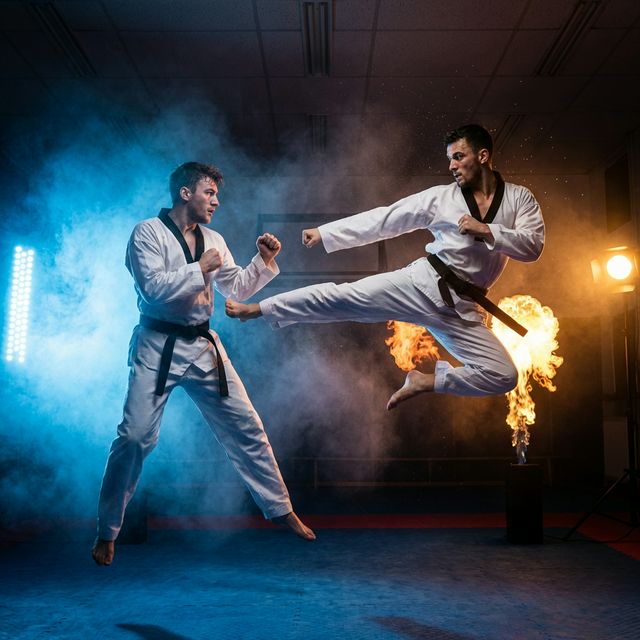
The Breakdown in Modern Dojangs
Unfortunately, many commercial "McDojangs" have stripped away this etiquette to appease easily offended customers. They treat the master as a fitness instructor rendering a paid service, rather than a guardian of an ancient lineage. When the etiquette dies, the martial art degrades into a simple kickboxing aerobic class.
Conclusion
The strict etiquette of the dojang is entirely intentional. It strips away societal hierarchies—wealth, status, profession—and replaces them with a pure meritocracy based entirely on sweat, discipline, and the color of the belt tied around the waist. The bow is not subservience; it is the ultimate equalizer.