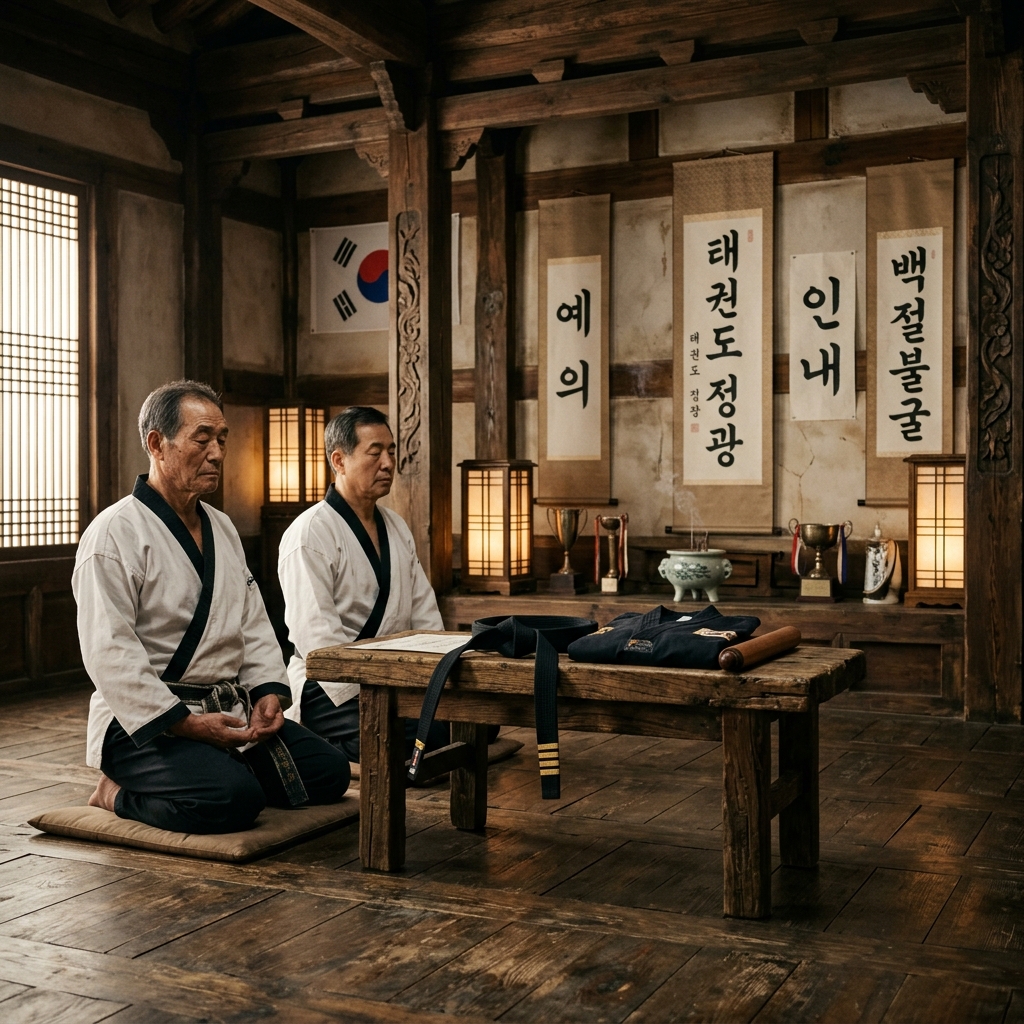
Dance vs Combat
A frequent criticism leveled against modern World Taekwondo Poomsae is that it has devolved into a highly stylized gymnastic dance, devoid of actual martial application. Critics point points to deep, impractical stances and overly dramatic chambering motions as proof of its combative illegitimacy.
However, this criticism ignores the concept of Hae-sul (the Korean equivalent of the Japanese Karate term Bunkai)—the practical, combative application of the solo form.
"A block in a pattern is rarely just a block. It is a strike, a joint lock, or a throw hidden in plain sight."
Deconstructing the Movements
When pattern movements are analyzed combatively, the exaggerated motions suddenly make terrifying sense.
- The Chambering Hand: Every block requires the opposite hand to chamber tightly at the hip or ribcage. This is not just for 'balance' or 'aesthetic symmetry'. In Hae-sul, that pulling hand represents grabbing the opponent's lapel or wrist and violently pulling them off-balance directly into the path of your blocking arm (which is actually a strike to the neck or face).
- The Slow Tension Moves: The agonizingly slow, isometric pushes found in Koryo or Sipjin are not slow-motion strikes. They represent grappling. The slow 5-second push simulates the physical resistance of locking an opponent's arm or choking them out.
- The Exaggerated Stances: A massive Ap-Kubi (Forward Stance) leaves the groin exposed in a real fight. But in Hae-sul, dropping into that deep stance is the mechanical action required to break an opponent's balance or execute a hip throw (over-the-shoulder toss).
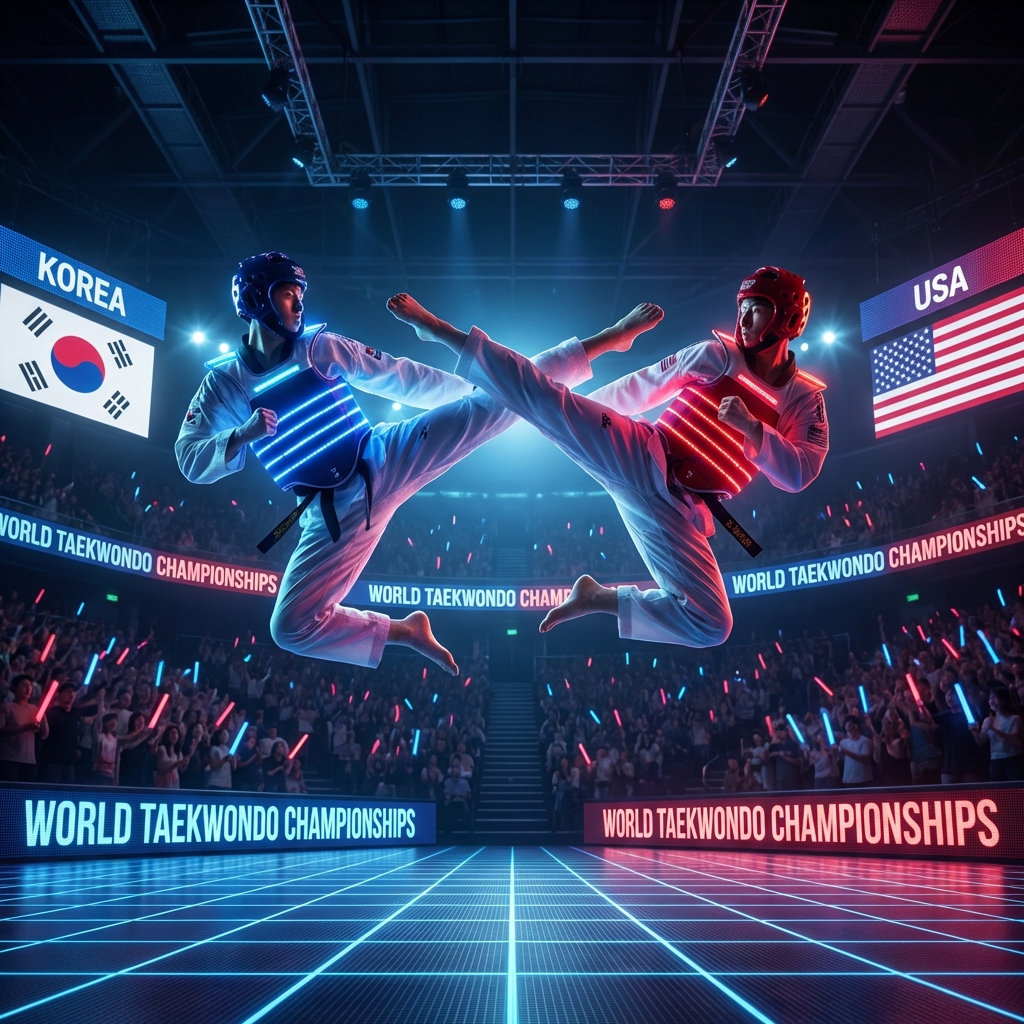
Why Applications Matter for Competition
Why should an elite sport-Poomsae athlete care about hypothetical street-fight applications? Because understanding the intent of the move dictates the expression of the move.
If an athlete believes a low block (Arae Makki) is simply swatting away a kick, they will perform it lightly. If the athlete understands that the Arae Makki is actually a hammer fist designed to shatter the opponent's femur or groin, the technique instantly transforms. The athlete's eyes (Si-seon) become lethal, and the kinetic energy (Dan Jon Ho Heup) becomes devastating. Judges score this intent, even if they don't explicitly know the application.
Conclusion
Poomsae is a coded language. While WT competition evaluates the calligraphy of the code, true martial artists strive to understand the brutal translation. Knowledge of Hae-sul is the secret ingredient that elevates a routine from empty gymnastics to profound martial art.