The Promise of Objectivity
Prior to the 2012 London Olympics, Taekwondo scoring was entirely subjective. Four corner judges held clickers, and if three of them pressed the button simultaneously, a point was awarded. This led to massive corruption, bias, and the infamous "home-town advantage."
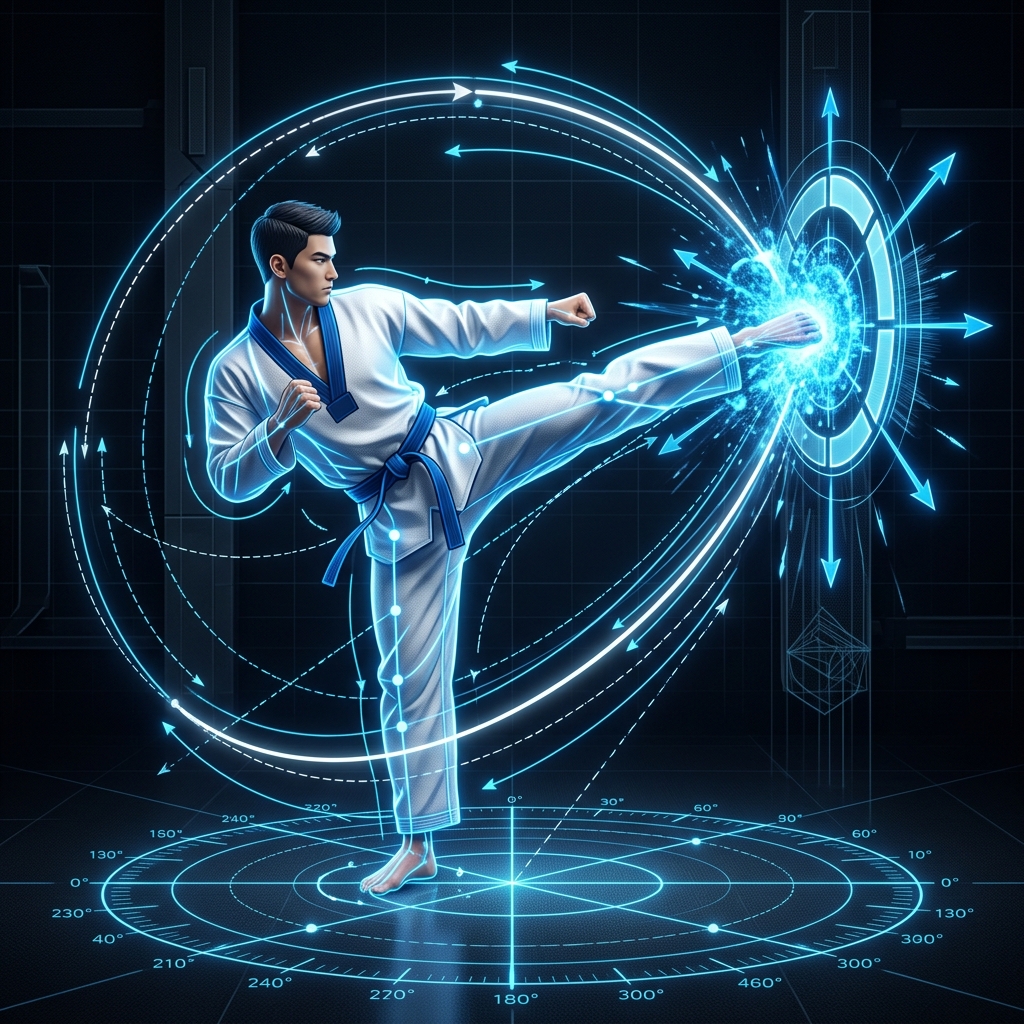
The introduction of the Protector and Scoring System (PSS) promised absolute purity: A computer sensor in the foot hits a computer sensor in the chest. Math determines the impact. Boom—a point is born. What could go wrong?
"The PSS did not remove human error. It simply transferred the error from the biases of the human brain to the glitches of Bluetooth connectivity."
The "Ghost Point" Phenomenon
The primary nightmare for modern referees is the "Ghost Point." The athletes are in a messy clinch. An athlete throws a wild, weak knee strike, and the heel sensor accidentally grazes the chest protector. The computer registers the impact and awards 2 points.
The center referee knows, objectively, that it was not a valid Taekwondo technique. However, the machine has spoken. The referee is caught in a horrific dilemma: ignore the computer (risking a formal protest from the coach) or allow an invalid, ugly strike to decide the fate of an Olympic medal.

The Calibration Crisis
At the amateur level, dojang owners frequently purchase 1st generation electronic gear that has not been calibrated in 5 years. The sensors degrade. In Round 1, an athlete kicks the hogu so hard they crack a rib, and no point scores. In Round 2, an athlete lightly taps the hogu with their big toe, and it registers 2 points.
The center referee is left trying to manage an angry coach, a crying athlete, and a computer system that is mathematically hallucinating. The referee becomes the focal point for the technological failure.
Conclusion
Electronic scoring saved Taekwondo’s Olympic status by providing a veneer of transparency. However, it completely changed the biomechanics of the sport. Until the technology advances beyond simple impact-sensors to actual motion-tracking AI, the referee will remain trapped between the purity of the art and the demands of the machine.