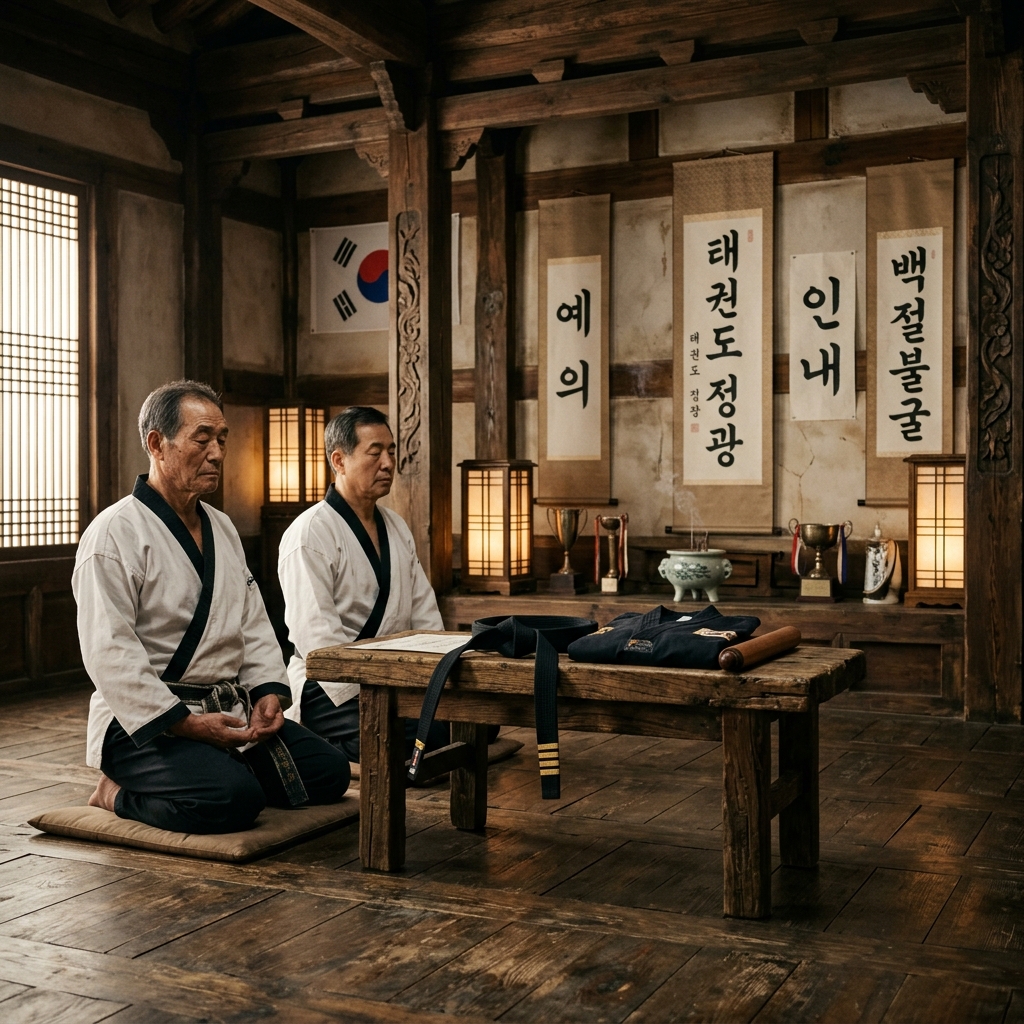
A Tale of Two Disciplines
To the untrained eye, Taekwondo is a monolithic martial art characterized by high, rapid kicks. However, within the global community, a profound philosophical and biomechanical schism exists. The Great Divergence between Sport Taekwondo (Kyorugi) and Traditional Taekwondo (Chung Do Kwan, Moo Duk Kwan, etc.) is a fascinating study in how competition shapes culture.
Originally formulated in the mid-20th century as a unified combat system for the South Korean military and civilian populace, traditional Taekwondo emphasized devastating, single-strike stopping power. Stances were deep, punches (Jireugi) were thrown with lethal intent to the face and body, and kicks were highly chambered to maximize kinetic transfer.
"The martial art was built for survival. The sport was built for the Olympic stage. Both are beautiful, but their objectives are fundamentally, irreversibly different."
The Catalyst: The Olympic Dream
The divergence accelerated rapidly following Taekwondo's debut as a demonstration sport at the 1988 Seoul Olympics. To secure permanent Olympic status, the World Taekwondo Federation (now World Taekwondo, WT) needed to standardize rules, ensure athlete safety, and make the scoring subjective and spectator-friendly.
- Removal of Face Punches: To reduce severe CTE and facial lacerations, punches to the head were banned. This single rule change completely altered the defensive guard of sport athletes, leading to the lowered hands seen in modern Kyorugi.
- The Rise of the Electronic Hopper: Before PSS (Protective Scoring Systems), human corner judges preferred loud, snapping kicks over deep, pushing strikes. The 'flick' kick was born to generate the acoustic "smack" on the hogu without committing body weight.
- Weight Classes and Speed: Traditional combat cares little for weight classes. In sport, moving optimally within a highly specific weight boundary prioritized speed and lactic endurance over raw, absolute power.
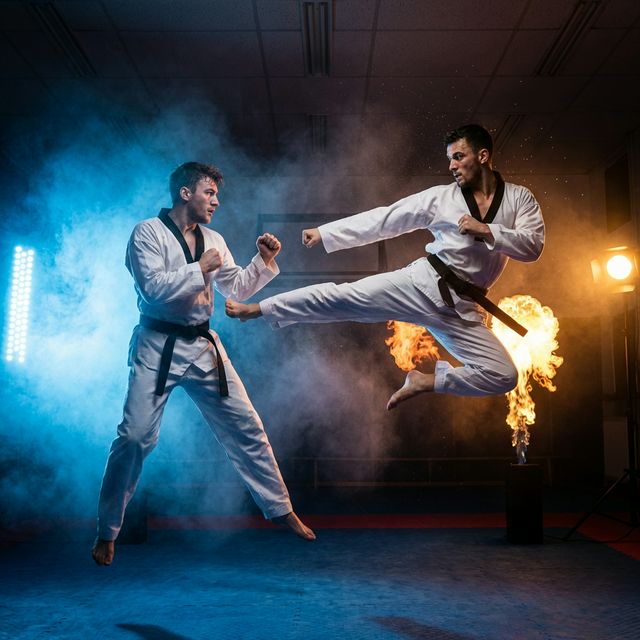
The Modern Biomechanical Contrast
Today, a high-level sport athlete and a traditional master move completely differently. A WT competitor utilizes a narrow, bouncy stance to explode laterally and utilizes hip-flexibility over quad-depth to flick the front leg. A traditional practitioner maintains a rooted, 50/50 weight distribution, chambering the knee fully to deliver bone-breaking force.
Conclusion: Can They Coexist?
The divergence is not inherently negative. Sport Taekwondo has brought unprecedented global reach, athleticism, and youth engagement to the Korean martial art. Conversely, traditional dojangs serve as the cultural anchor, preserving the self-defense efficacy, tenets, and spiritual discipline. The modern master recognizes not the supremacy of one, but the necessity of both.