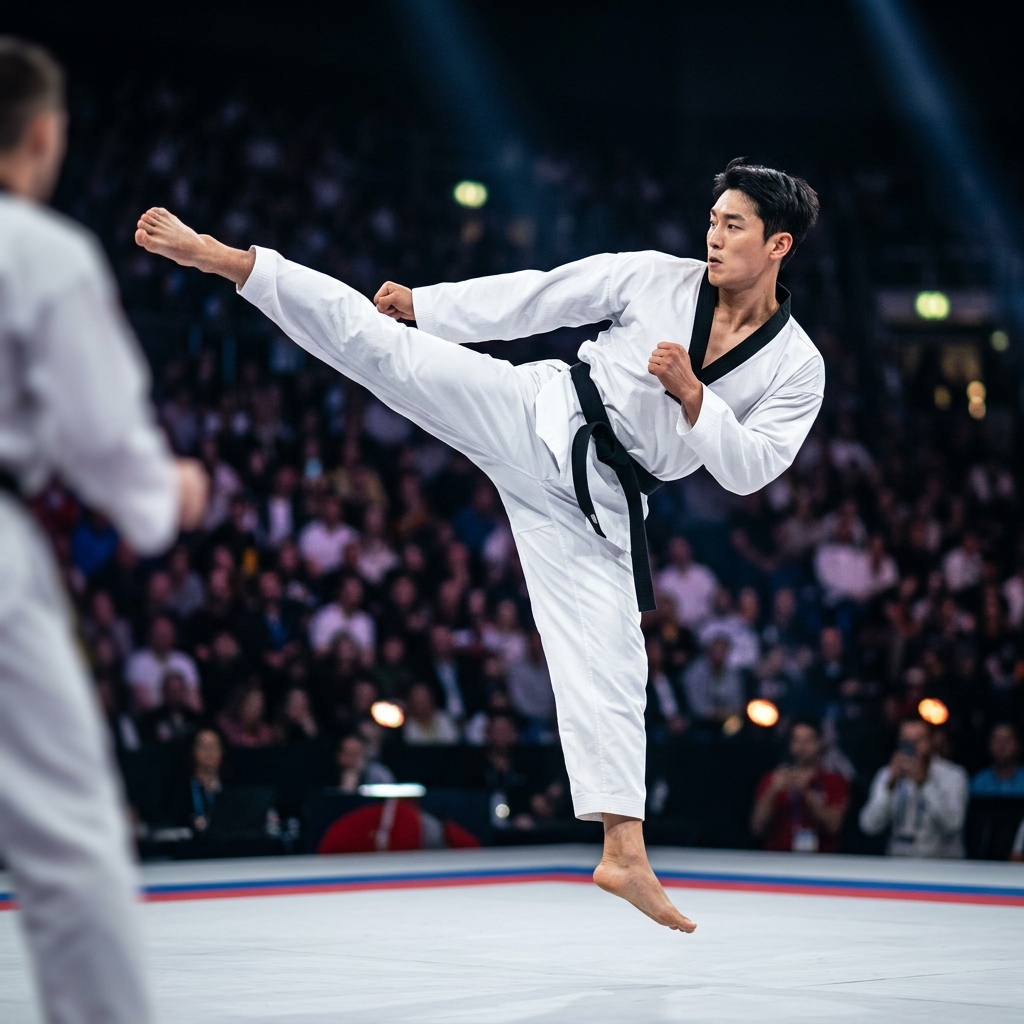
The Death of Distance
With the introduction of electronic body armor, the tactical meta of Taekwondo dramatically shifted. Instead of fighting at long range, athletes realized it was mathematically safer to crash the distance, smother the opponent's kicks, and fight from a chest-to-chest embrace: The Clinch.
To the untrained eye, the clinch looks like two exhausted athletes hugging while waiting for the referee to separate them. To a biomechanist, the clinch is an intense, invisible wrestling match for skeletal leverage. The athlete who wins the center of gravity wins the exchange.
"The clinch is 90% invisible. It is a war of microscopic hip adjustments and hidden shoulder pressure."
The Geometry of Dominance
When two athletes crash together, they immediately establish a structural hierarchy. There are three key biomechanical principles to dominating the clinch:
- The Underhook Advantage: In grappling, this is universal. The athlete whose arms are under the opponent's arms (closer to their opponent's armpits) controls the leverage. They can physically lift the opponent's center of gravity, making it impossible for the opponent to lift a leg to kick, while maintaining their own base to throw a push-kick (Cut).
- Head Placement: The head is the steering wheel of the spine. If Fighter A successfully tucks their chin into the collarbone of Fighter B, they can use their neck muscles to drive Fighter B backward. Fighter B's posture breaks, preventing them from throwing a high kick.
- The 'Monkey Kick' Vector: The most common attack from the clinch is the rising heel hook to the back of the helmet (the Monkey Kick). Because the athletes are chest-to-chest, the leg must travel straight up vertically. The athlete who can hollow out their core (sucking their stomach in to create 2 inches of space) is the one who finds the geometric pathway to thread their knee upward and flick the heel.
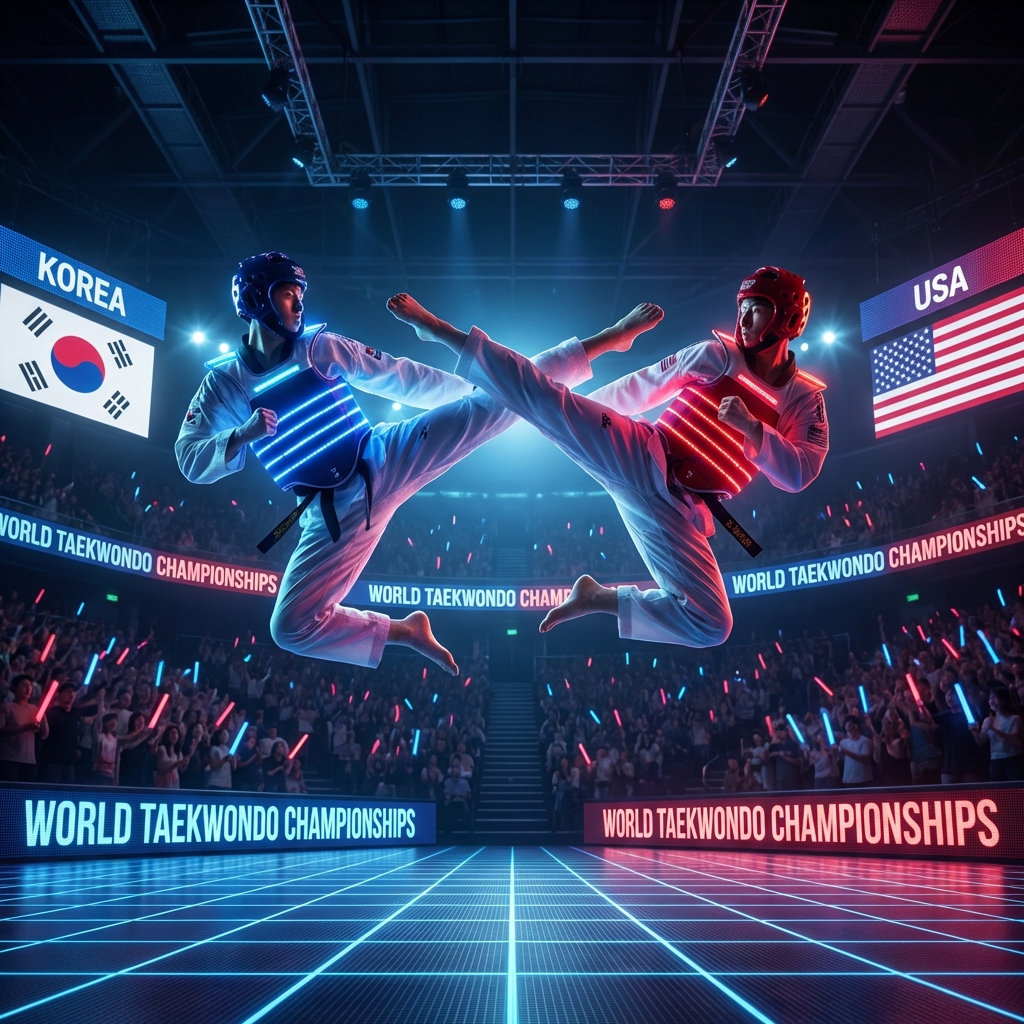
The Stamina Drain
Fighting in the clinch is extraordinarily exhausting because it requires isometric muscle tension. You are constantly flexing your back and core just to maintain your footing against another human's body weight.
Elite fighters use the clinch as a weapon of attrition. A taller, stronger fighter will intentionally crash into the clinch and completely relax their upper body, forcing the smaller fighter to carry the larger fighter's weight for 3 seconds before the referee steps in. Over the course of three rounds, this isometric load completely destroys the smaller fighter's leg stamina.
Conclusion
The clinch is not a break in the action; it is a different sport entirely. Taekwondo athletes must cross-train rudimentary Greco-Roman wrestling concepts—pummeling, underhooks, and center of gravity manipulation—to survive the modern meta.