The Mathematics of Speed
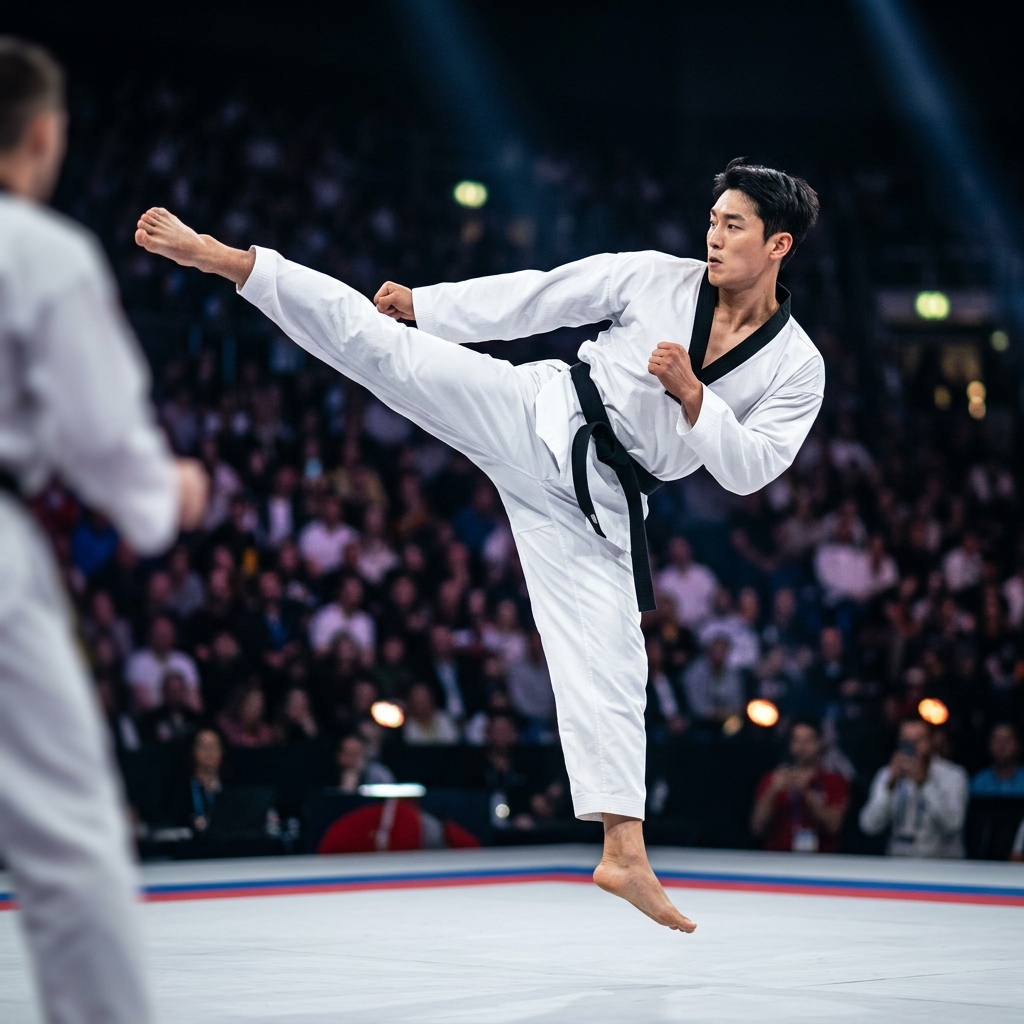
In Olympic Kyorugi, an elite roundhouse kick travels from the floor to the helmet in roughly 0.25 to 0.30 seconds. The average human visual reaction time (the time it takes for the eyeball to see movement, send a signal to the brain, and the brain to command the arm to block) is about 0.25 seconds.
Mathematically, this means if you wait to see the kick coming before you react, it is already too late. You will be hit. How, then, do elite athletes block anything at all?
"Amateurs react to the kick. Masters react to the twitch before the kick."
Reflexes vs. Reactions
It is vital to distinguish between a reflex and a reaction.
- A Reflex is hardwired into your spine. If you touch a hot stove, your hand pulls back before the pain signal even reaches your brain. You cannot train this; it is biological.
- A Reaction requires cognitive processing. It is the brain saying, "I see a red leg moving toward my head, therefore I must raise my left arm." This takes time. Elite athletes spend thousands of hours trying to compress this cognitive processing time to near zero.
Pattern Recognition (Advanced Anticipation)
The secret of elite Taekwondo athletes is not that they have faster optic nerves; it is that they rely on Pattern Recognition instead of raw reaction time. They do not wait to see the kick.
Through years of sparring, an athlete's brain unconsciously builds a database of pre-kick indicators ("tells"). They notice that when the opponent breathes out sharply and drops their front shoulder by an inch, a back kick is coming in precisely 0.1 seconds.
The defender's brain processes the shoulder drop, references the database, predicts the back kick, and initiates the counter-attack before the opponent’s leg has even left the ground. To the untrained eye, it looks like supernatural reflexes. In reality, it is highly optimized, subconscious data processing.
Conclusion
If you are struggling with speed, stop trying to move your arms faster. Start watching your opponent's chest and shoulders instead of their feet. Train your brain to recognize the architectural setup of the attack, and you will arrive at the block before they arrive at the target.