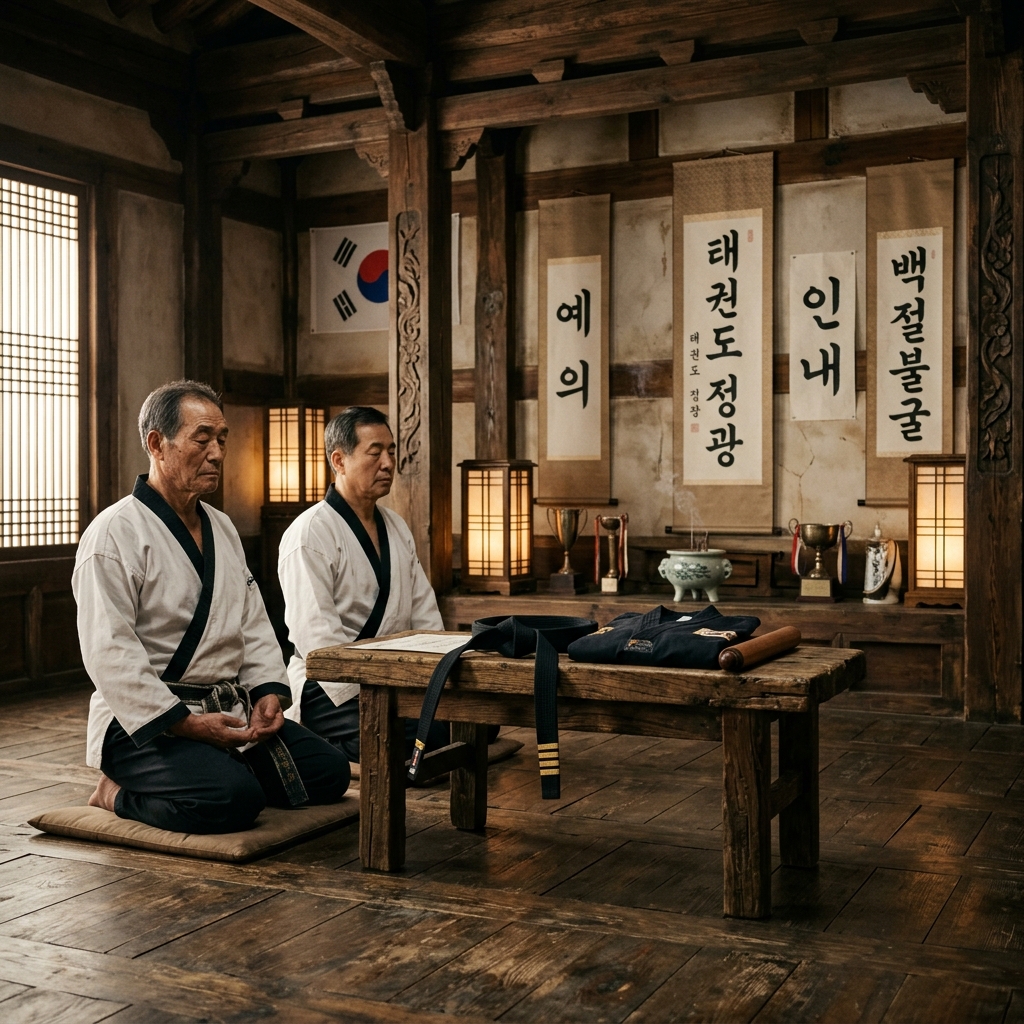
The Pendulum Swings Back
For the past twenty years, the marketing engine of global Taekwondo has been the Olympic Games. Parents send their children to dojangs hoping to forge the next gold medalist. But recently, a surprising demographic shift is occurring: adults are returning to the mats, not for sport, but for survival and self-mastery.
We are witnessing a profound comeback of the Traditional Dojang—schools that de-emphasize electronic scoring and tournament medals in favor of practical self-defense, deep stance work, bare-knuckle striking, and rigid etiquette.
"A gold medal is an incredible achievement. But knowing how to end a violent altercation in an alleyway requires a completely different syllabus. People are waking up to that."
Why Adults Are Seeking Tradition
The sportification of WT Taekwondo has inadvertently created a market gap. Modern Kyorugi is a tag-game of highly-tuned elite athletes. It is not designed for a 40-year-old accountant seeking fitness, stress relief, and practical safety.
- Practical Self-Defense (Hosinsool): Traditional curriculums integrate joint locks, sweeps, throws, and devastating hand strikes (including ridge hands and elbows) that are wholly illegal in WT sport rules.
- Low-Impact Longevity: The extreme hip mobility required for modern sport 'cut kicks' destroys the hips and knees by age 30. Traditional stances build foundational leg strength without the repetitive tearing of ligaments.
- Mental Discipline (Do): Traditional classes focus heavily on the "Do" (The Way). Meditation, deep philosophical adherence to the tenets (Courtesy, Integrity, Perseverance, Self-Control, Indomitable Spirit), and strict hierarchy provide a mental sanctuary from the chaotic modern world.

The 'New' Traditional Syllabus
Interestingly, the modern traditional dojang is not just a relic of the 1970s. Masters are evolving the curriculum. They are combining the biomechanical science of modern sports medicine with the brutal efficiency of old-school Chung Do Kwan. Heavy bag work has replaced air-punching; live-resistance grappling defense is being woven into standard belt testing.
Conclusion
The traditional dojang is no longer viewed as 'outdated'. It is becoming the premium destination for martial artists who view Taekwondo not as a game to be won, but as a lifelong vehicle for physical preservation and mental fortification.