
The Myth of Constant Grinding
A common fallacy in grassroots Taekwondo is the belief that to win the World Championships, an athlete must practice their patterns at 100% speed and power every single day for six months. In reality, this approach guarantees two things: structural burnout and soft tissue injuries.
Elite national teams utilize Periodization—the systematic planning of physical training. The goal is not to be perfect all year, but to manipulate the body's adaptation cycle so that the athlete reaches absolute peak performance on one specific day of the year.
"Peaking is a mathematical equation. If you peak in April for a tournament in May, you will step onto the mats exhausted and slow. Timing is everything."
The Three Phases of a Poomsae Macro-Cycle
A standard 6-month preparation cycle for a major tournament is divided into distinct phases.
Phase 1: The Accumulation Phase (Months 1-3)
The focus is entirely on structural rebuilding and technical dissection. There is almost zero "full-speed" pattern practice.
- Physical: Hypertrophy (muscle building), deep isometric holds, core stability, and increasing extreme ranges of motion (flexibility).
- Technical: Breaking the patterns down into single movements. Athletes might spend an entire 2-hour session practicing nothing but the transition from back stance to front stance in Taegeuk 7, moving at 20% speed to iron out 0.1 accuracy deductions.
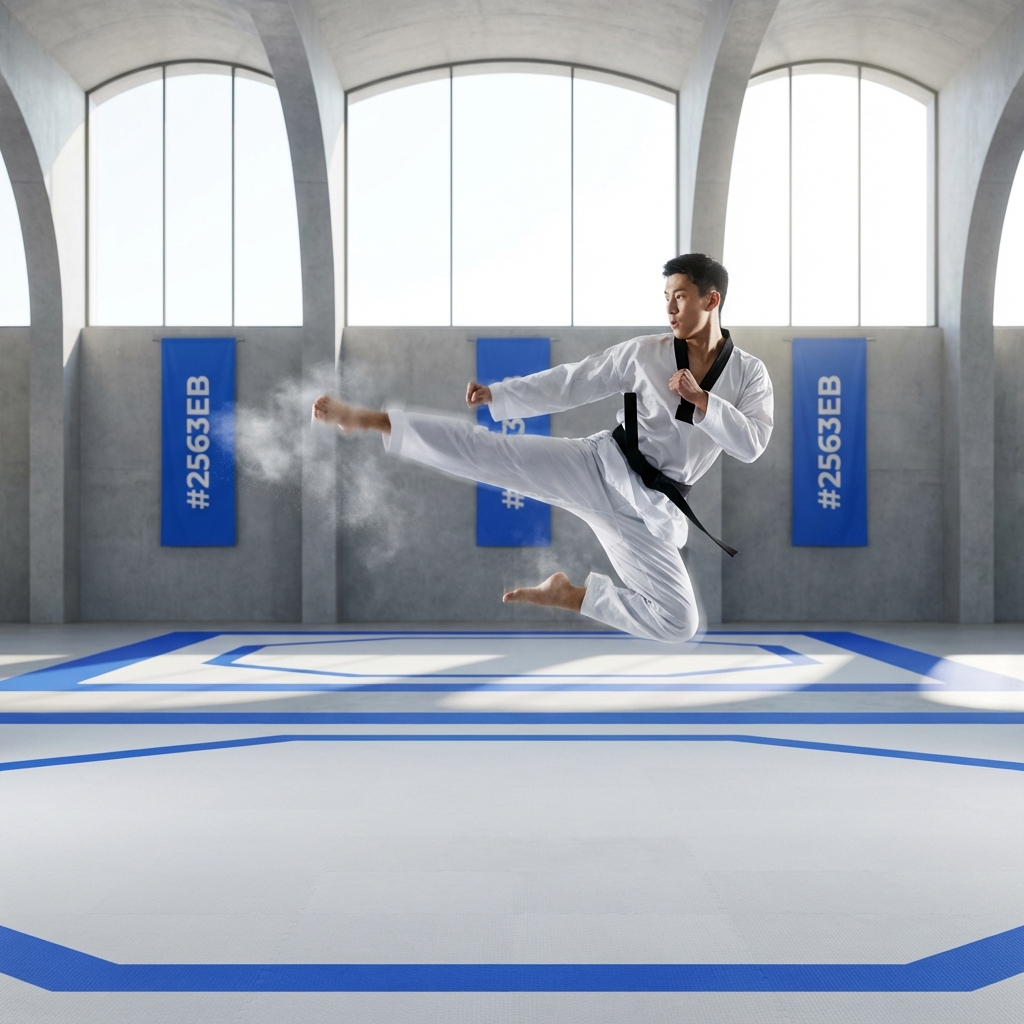
Phase 2: The Transmutation Phase (Months 4-5)
The strength gained in Phase 1 to converted into Poomsae-specific speed and power.
- Physical: Plyometrics, bounding, and explosive core twists. The weights drop, and movement velocity increases.
- Technical: Linking sequences together (2-4 movement combinations) at 80% to 90% speed. The focus shifts to rhythm, the 'Dobok snap', and perfecting the timing of the Ki-hap.
Phase 3: The Realization Phase (Month 6 - Tapering)
The final 4 weeks before the tournament. The volume drops dramatically to shed systemic fatigue and allow the nervous system to fully recover.
- Physical: Intense but very short workouts. Neuro-activation drills to keep the fast-twitch fibers firing.
- Technical: Full, simulated tournament runs at 100% effort. Athletes wear their competition uniforms, walk onto the mats, bow to mock judges, and perform. They focus completely on mental-state management and expression of energy. Crucially, less than 15 full repetitions are performed per day to preserve the joints.
Conclusion
Poomsae training is not just repeating the pattern until you collapse. It is a highly scientific manipulation of the human body. By structuring training camps through proper periodization, coaches protect their athletes from chronic injury and guarantee maximum explosive performance when it matters most.