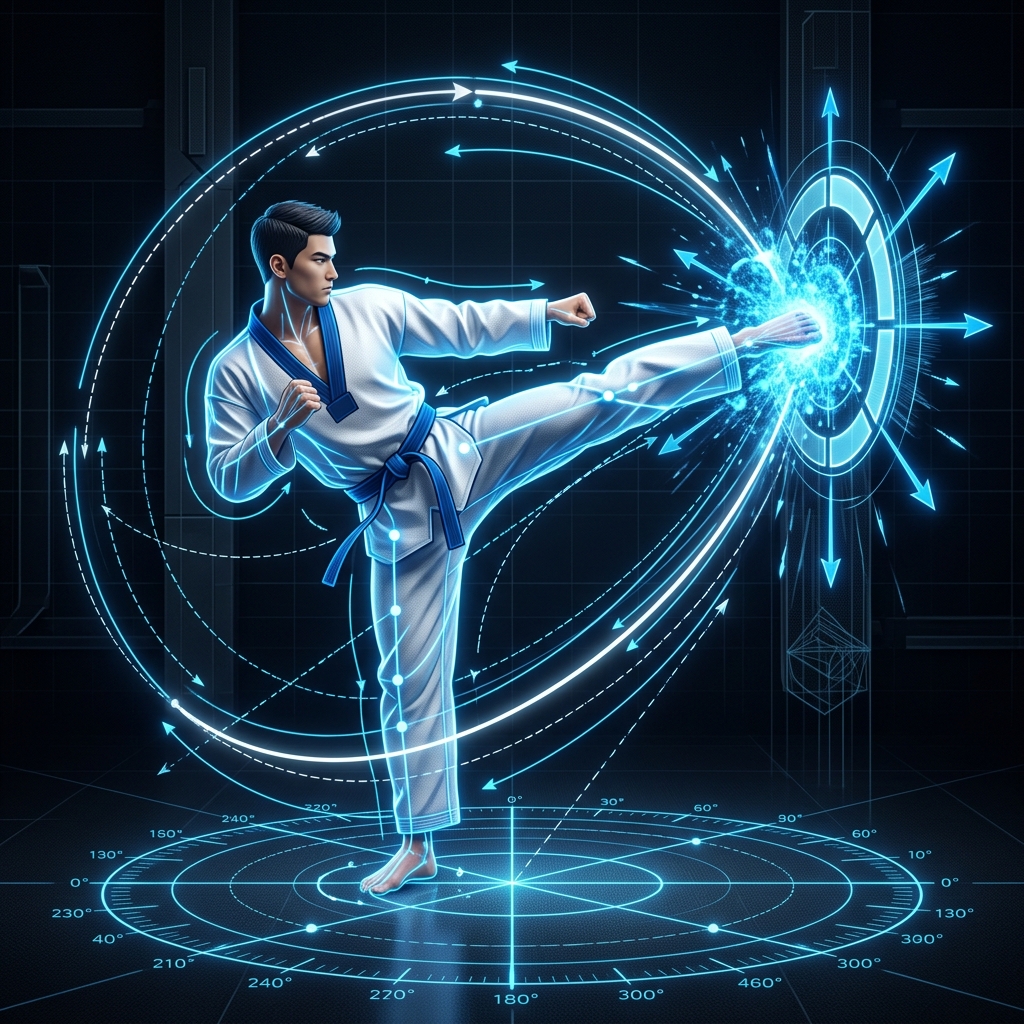
The Original Purpose of Patterns
Before globalization, before the Olympics, and before foam mats, there was Poomsae. Historically known as Hyung or Tul, these patterns were the core syllabus of Taekwondo. They were not performances; they were visceral, high-resistance combat simulations designed to build muscle memory against multiple armed attackers.
A low block (Arae Makki) was not just a defensive deflection; it was a forearm strike designed to break the radial bone of an attacker's kicking leg. The stances were deep to root the practitioner into the earth for maximum kinetic transfer. Breathing was harsh and guttural.
"If you perform a traditional Poomsae properly, you should be exhausted and your knuckles should ache from the tension. It is a battle rhythm, not a dance."
The Shift to Sport Poomsae
As Kyorugi dominated the Olympic spotlight, Poomsae was relegated to the background. To revive its relevance, WT created the World Poomsae Championships. This necessitated a rigid, standardized scoring system.
Thus began the shift from martial efficacy to artistic gymnastics. To score highly, athletes began emphasizing extreme aesthetics over functional power:
- Hyper-Extension over Power: Kicks in Poomsae are now expected to reach full 180-degree vertical splits (Yop Chagi) and hold at the apex. Combat functionality dictates the kick should target the ribs or groin; sport dictates it must point to the ceiling for aesthetic flair.
- The 'Snap' Aesthetic: Judgers reward a violent, acoustic 'snap' in the uniform. Practitioners now tailor their doboks heavily to amplify this sound, prioritizing loud, jerky stops over fluid, heavy combat combinations.
- Synchronization and Freestyle: The introduction of team synchronization and Freestyle Poomsae (incorporating music, gymnastics, and 540-degree kicks) completed the transition from shadow-boxing to Olympic-level floor routine.
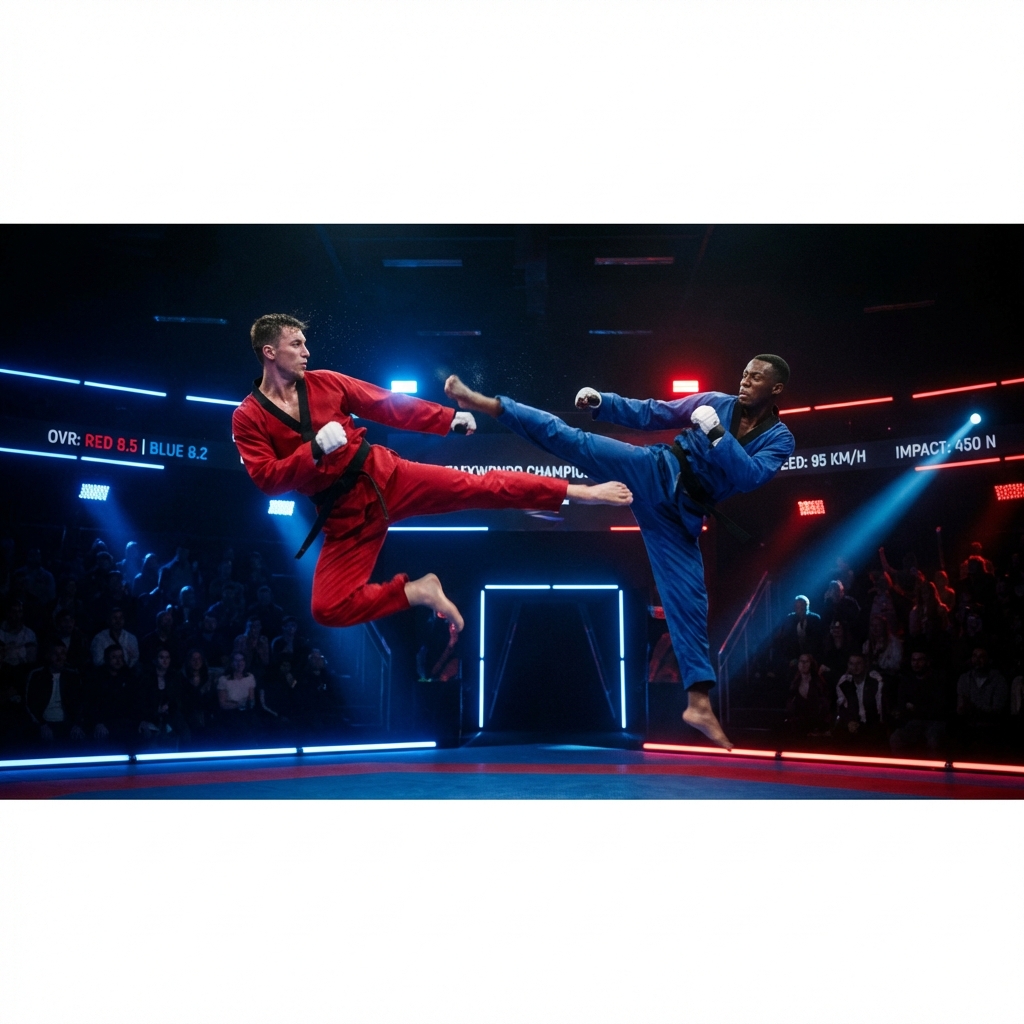
Finding the Middle Ground
While purists lament the loss of combative intent, Sport Poomsae has produced some of the most phenomenally flexible, coordinated, and explosive athletes in the history of martial arts. The execution is flawless, even if the application is abstracted.
Conclusion
The evolution of Poomsae mirrors the evolution of Taekwondo itself. It has traded lethal application for breathtaking athletic expression. Modern masters encourage their students to practice both: compete with the high kicks and snappy uniforms, but drill the applications (Bunkai) in the dojang so the deadly intent behind the movements is never forgotten.