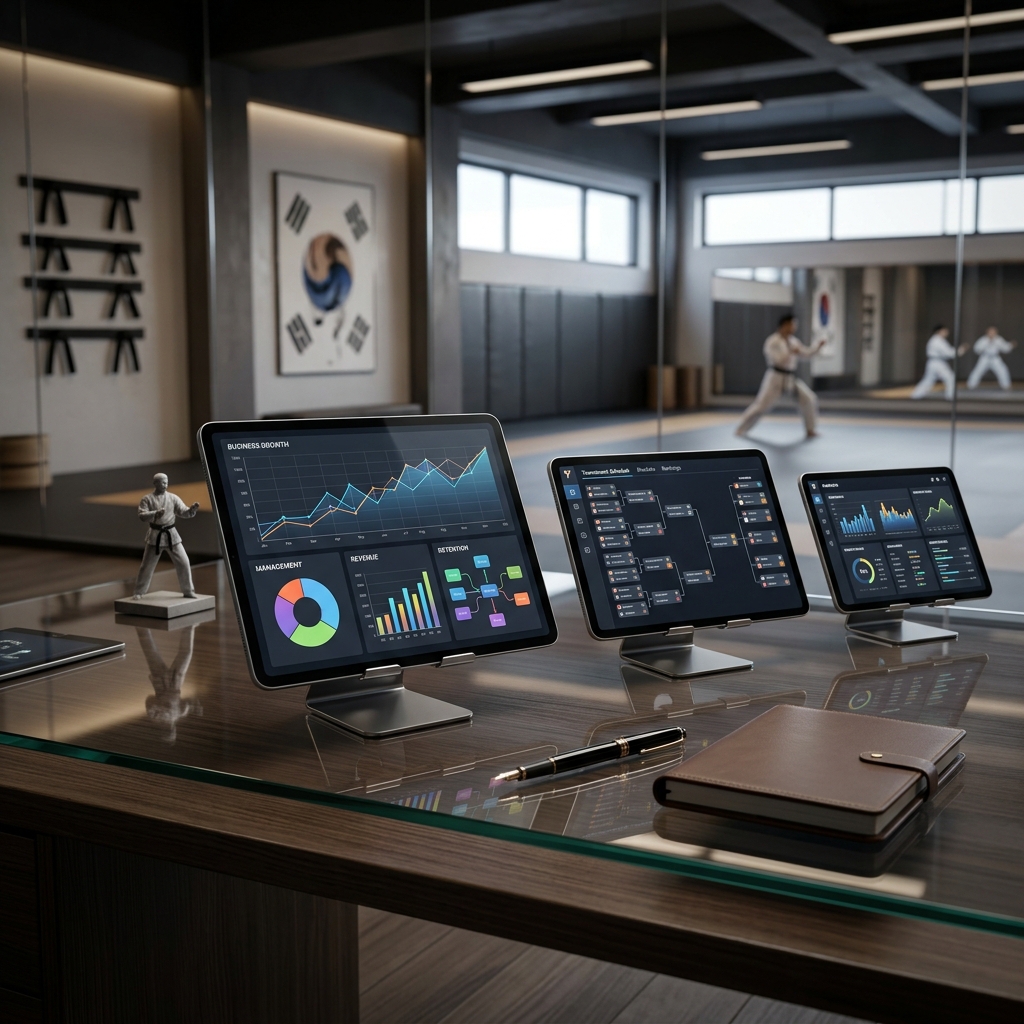
The Flaw of Human Perception
The human eye processes visual information at roughly 30 to 60 frames per second. A world-class Taekwondo punch locks out in less than 0.15 seconds. It is biologically impossible for a coach to see everything that happens during a high-speed transition in a pattern.
Relying solely on real-time visual coaching leads to plateaus. Elite Poomsae development now mandates the use of High-Speed Video Analysis as the ultimate objective truth.
"Video does not lie, it does not hold bias, and it does not blink. The ipad is the most important tool in the modern Dojang."
The Three-Camera Setup
To properly analyze a Poomsae athlete, a single front-facing camera is insufficient. Deductions often hide in the Z-axis (depth).
- Camera 1 (Front/Center): Placed exactly where the Head Judge sits. Used to evaluate lateral symmetry, stance width, and the target height of punches and kicks.
- Camera 2 (Profile/90 Degrees): Placed directly parallel to the athlete's starting line. This is arguably the most critical angle. It reveals postural leaning (leaning back during a kick), proper Chamber depth, and whether a stance is too long or too short.
- Camera 3 (Overhead/Balcony): If available, an overhead angle perfectly reveals rotational errors—whether the athlete is genuinely turning 90 degrees or cheating the angle to 85 degrees.
The Overlay Protocol
Recording the video is only step one. The actual coaching occurs during the review.
Development programs utilize software (like Coach's Eye or Kinovea) to draw digital protractors and plumb lines over the paused video. If an athlete is standing in Ap-Kubi (Forward Stance), the coach drags a digital line from the knee straight down. If the line falls behind the toes, the stance is too shallow—a guaranteed 0.1 deduction. If the line extends past the toes, the stance is too deep, destroying mobility.
The 'Ghosting' Technique
Advanced programs will use 'ghosting'—overlaying a translucent video of a World Champion performing a pattern perfectly directly over the video of their own athlete performing the same pattern. When played simultaneously, any deviation in timing, stance length, or extreme limb extension becomes glaringly obvious.
Conclusion
To score highly, you must see what the judges see, but in slow motion. Implementing strict, regular video analysis protocols forces athletes to confront the brutal reality of their micro-errors, paving the way for flawless execution.