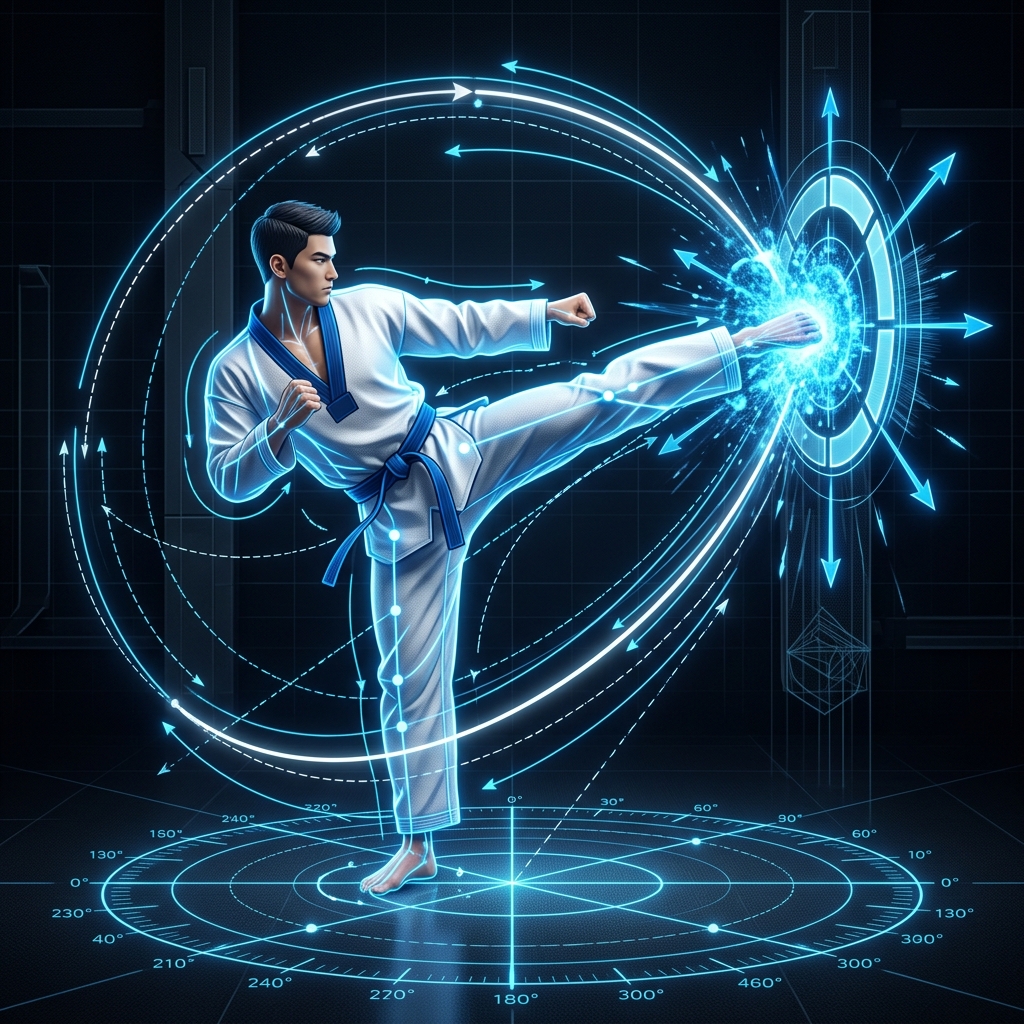
The Space Between the Strikes
In Poomsae, judges do not watch your hands; they watch your feet. While spectacular kicks and explosive punches draw the crowd's applause, the difference between a gold and a bronze medal is usually determined by Footwork and Transitions.
An athlete can execute a perfect blocking motion, but if their rear foot drags audibly on the mat, or if their center of gravity bounces up and down like a piston during a transition, they will face heavy deductions in both Accuracy (balance) and Presentation (rhythm).
"The hallmark of a master is not the strike itself, but the utter silence and fluidity of their approach."
The Biomechanics of the 'Silent Glide'
The goal of Poomsae footwork is to traverse the mat without altering the altitude of the hips (the center of mass). Bouncing up and down breaks the illusion of continuous, rooted power.
- Continuous Knee Flexion: To step forward from one Ap-Kubi (Forward Stance) to another without rising up, the athlete must bend the stationary supporting leg even deeper as the moving foot passes the center line. This allows the hip altitude to remain perfectly flat.
- The Heel-to-Toe Roll: The foot should never slap the mat flatly. When stepping forward, the heel of the moving foot must gently kiss the mat first, smoothly rolling onto the ball of the foot as weight transfers. This ensures silent, balanced anchoring.
- The Pivot Timing: When executing a 180-degree turn (e.g., in Taegeuk 1), the trailing foot must pivot on the ball of the foot at the exact same millisecond the blocking arm locks out. A late pivot leaves the hips "open," draining the block's power.
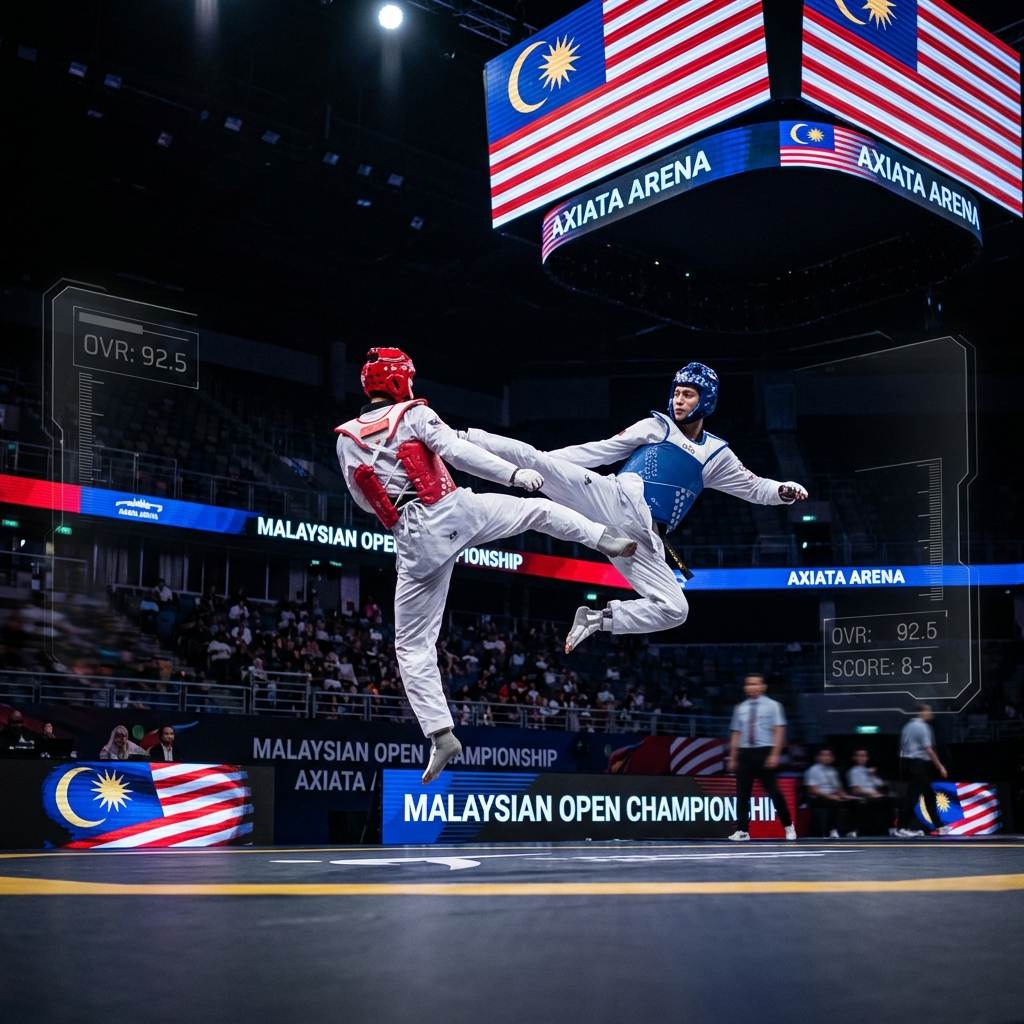
The 'Newspaper' Drill
To eliminate foot dragging, elite Dojangs utilize the 'Newspaper Drill'. A sheet of newspaper is laid on the mat. The athlete must demonstrate their stepping transitions directly over the paper.
If the athlete drags their foot instead of properly chambering it through the center line, they will catch the newspaper and tear it. This provides instant, undeniable feedback that their transition is "dirty" and would result in a deduction.
Conclusion
Footwork is the canvas upon which the art of Poomsae is painted. If the canvas is wrinkled, stumbling, and noisy, the strikes lose all their brilliance. Mastering the silent, height-locked glide is essential for any athlete aspiring to elite judging scores.