
The Dark Era of the Clinch
If you watched the 2016 or 2020 Olympic Games, you likely witnessed the darkest era of modern Taekwondo: The age of the Monkey Kick. Athletes would lock into tight clinches, lift their front leg awkwardly like a flamingo, and blindly rake the side of their foot against the opponent's Hogu hoping to trigger the sensitive PSS sensors.
It was aesthetically terrible, martially invalid, and incredibly frustrating for spectators. Fortunately, World Taekwondo (WT) took aggressive action to eradicate this technique through a combination of strict rule enforcement and advanced sensor technology.
"The Monkey Kick was an exploit of early Bluetooth tech, not a display of martial arts skill. Its removal has saved Kyorugi as a spectator sport."
How the Rules Killed the Technique
WT did not just ban the kick by name; they systematically dismantled the environment required to execute it.
- The 3-Second Clinch Rule: The Monkey Kick required prolonged proximity. Referees are now strictly mandated to separate athletes instantly (or issue double passivity penalties) if neither fighter executes an immediate, valid attacking technique from the clinch block.
- Invalidating Edge Strikes: Previous iterations of PSS allowed the heel sensor to trigger the extreme lateral edges (the armpit line) of the chest protector. New software thresholds completely invalidate these scraping motions, requiring heavy, perpendicular impact entirely directed at the core of the Hogu.
- Penalizing Leg Blocking: Attempting to lift the leg solely to block an opponent's attack or stall the match without executing a kick (the setup for the Monkey Kick) now results in an immediate, zero-tolerance Gam-Jeom.
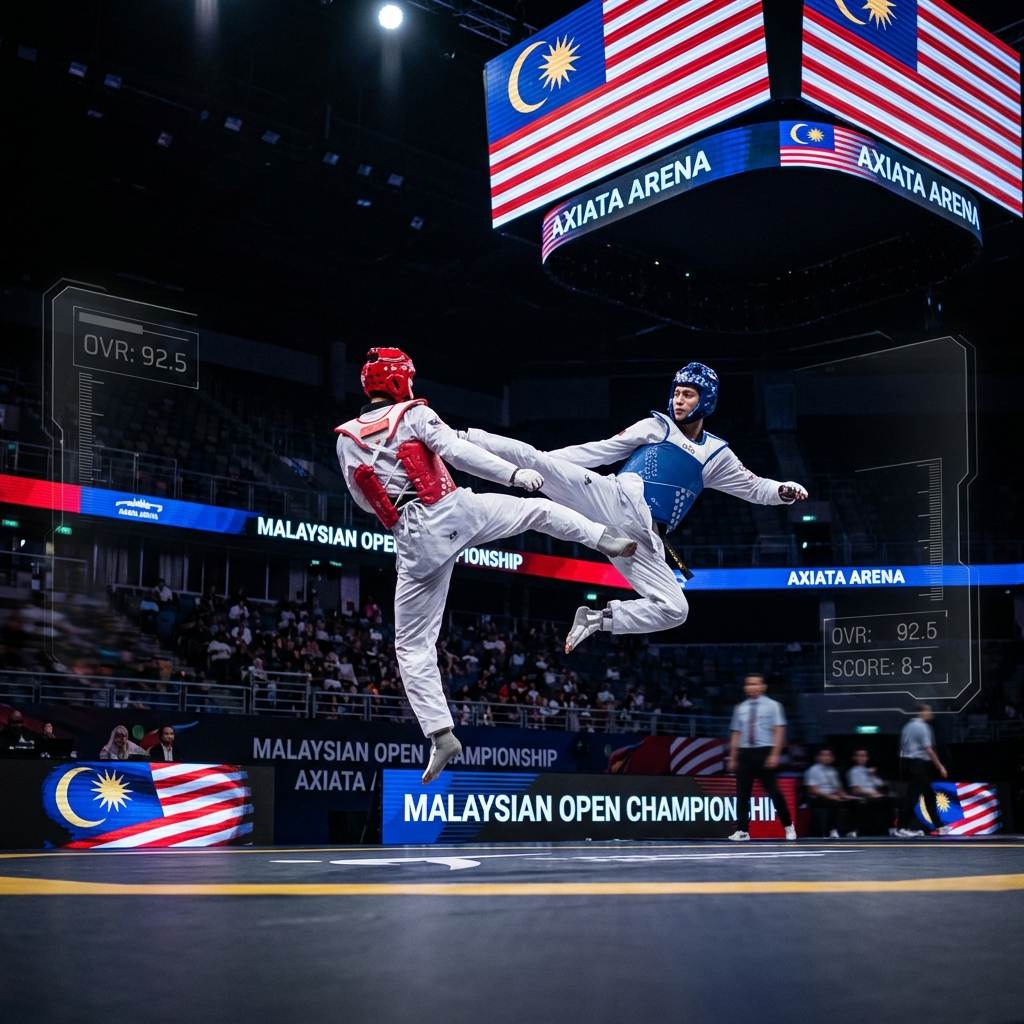
The Resurgence of the Crescent Kick
With the awkward, inside-scraping kicks effectively banned, athletes needed a new close-range weapon. This has led to a massive resurgence in the classic Bandal Chagi (Crescent Kick) and the descending axe kick within the clinch.
These kicks are biomechanically sound, visually impressive, and generate the required downward or rotational force to legally trigger the modern electronic sensors. The meta has shifted from "scraping" to "striking," a massive victory for traditional purists.
Conclusion
The eradication of the Monkey Kick serves as a prime example of a governing body successfully correcting a critical flaw in their sport. By aligning the ruleset with the limitations of the technology, WT has forced athletes to return to dynamic, athletic, and explosive techniques that define true Taekwondo.